
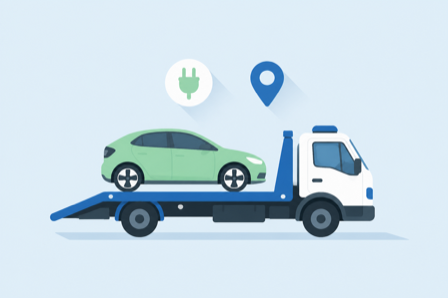
When an electric car stops on the shoulder, the wrong tow truck can turn a dead battery into a repair bill. Most EVs need to ride on a flatbed with all four wheels off the ground, and a roadside plan that dispatches a cheap wheel-lift truck to the nearest exit is not doing you any favors. That single detail, flatbed versus not, is what separates a good AAA alternative from a bad one for EV owners.
AAA is the default because everyone knows it, and it has invested in EV-capable flatbeds. It is not the only option, and depending on how far you drive and whether you already carry insurance, it may not be the cheapest. Here are five alternatives worth comparing, judged on the thing that matters for an electric car: getting the right truck, a long enough tow, and a fair price.
Quick Answer
- Better World Club: the greenest motor club, with EV-aware service and coverage that follows you to any car you are in.
- Allstate Roadside: the best standalone membership, and you do not need an Allstate policy to buy it.
- Good Sam Roadside Assistance: the pick for long-distance towing, with auto plans that reach well past a few miles.
- GEICO Emergency Road Service: the cheapest way in, as an add-on that starts around a few dollars a month.
- Progressive Roadside Assistance: the easy choice if you already insure your car with Progressive.
Quick Picks
| Service | Best for | Type | EV and flatbed note |
|---|---|---|---|
| Better World Club | EV owners wanting a green club | Motor club membership | EV-aware, request a flatbed |
| Allstate Roadside | Standalone membership | Membership, no policy needed | Ask for flatbed, set tow distance |
| Good Sam | Long-distance towing | Motor club membership | Longer tows suit stranded EVs |
| GEICO ERS | Cheapest add-on | Insurance add-on | Tows to nearest facility, request flatbed |
| Progressive Roadside | Existing Progressive drivers | Insurance add-on | Dispatcher-assigned, request flatbed |
1. Better World Club

Better World Club is the closest thing to a like-for-like AAA replacement with an environmental bent, and it has leaned into EV coverage. Membership covers you as a person rather than a single car, so you are protected in any vehicle you drive, and the club has added EV-friendly services such as mobile charging in some areas. For an electric car, that mindset matters, because you want a provider that understands why a flatbed is the default rather than treating it as an exception.
- Best for: EV drivers who want a full motor club with a greener footprint.
- Pros: EV-aware service, coverage follows the member, roadside plus travel and insurance perks.
- Cons: Smaller network than AAA, and premium tiers cost more than a basic insurer add-on.
- Pricing: Annual membership with tiered plans, broadly comparable to a traditional motor club.
2. Allstate Roadside
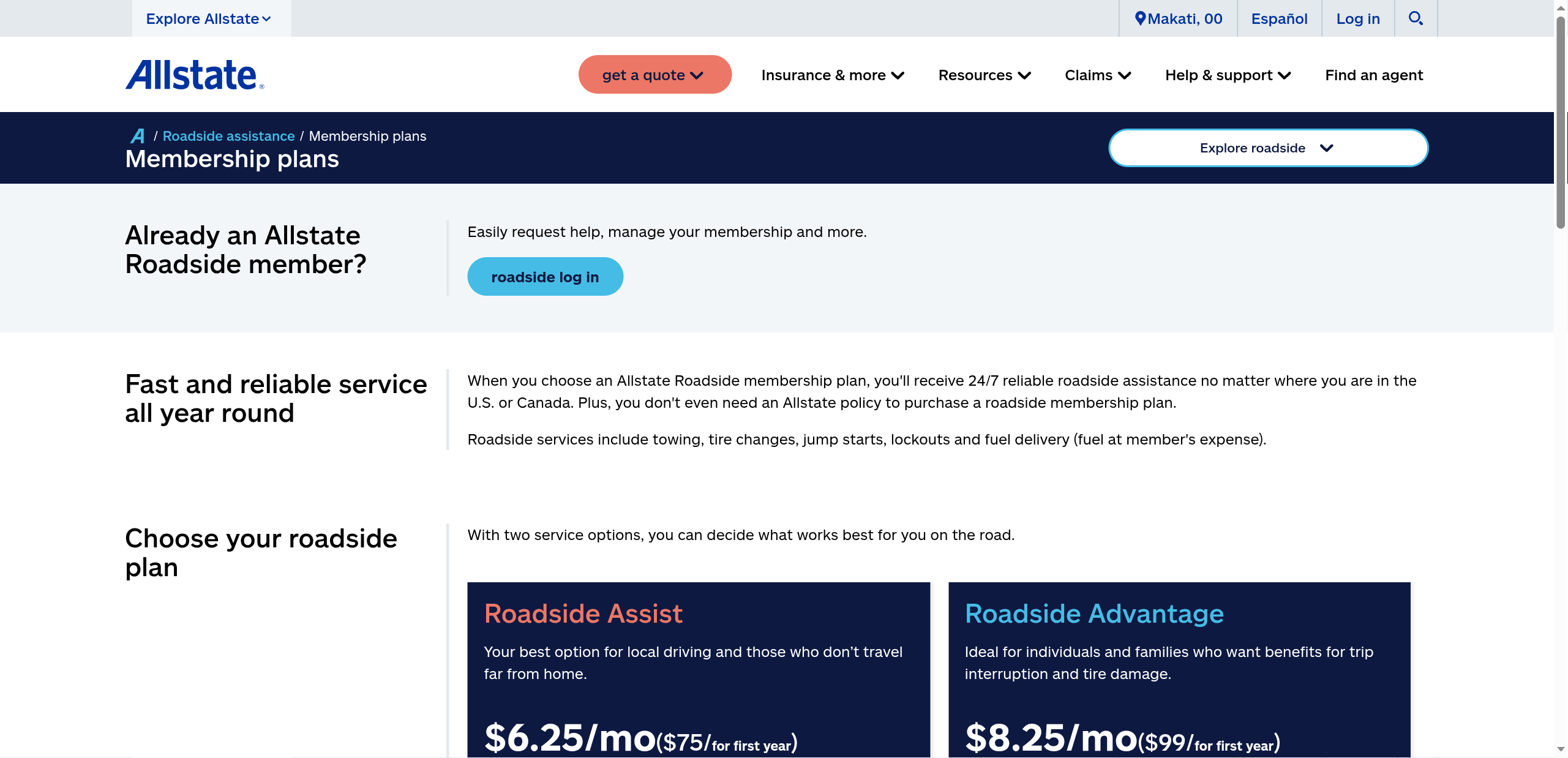
Allstate Roadside is the standout standalone membership because you can buy it even if you have never held an Allstate policy. It offers two tiers, and covers the usual towing, tire changes, jump starts, lockouts, and fuel delivery around the clock across the U.S. and Canada. For an EV, the membership route is helpful because you are booking a tow as a covered member rather than filing an insurance claim, which gives you room to specify a flatbed and a destination other than the closest exit.
- Best for: Drivers who want a dedicated membership without switching insurers.
- Pros: No Allstate policy required, two clear tiers, nationwide coverage.
- Cons: Tow distance is capped by tier, so confirm the limit fits your typical routes.
- Pricing: Two tiers, roughly $75 and $99 for the first year depending on the plan.
3. Good Sam Roadside Assistance
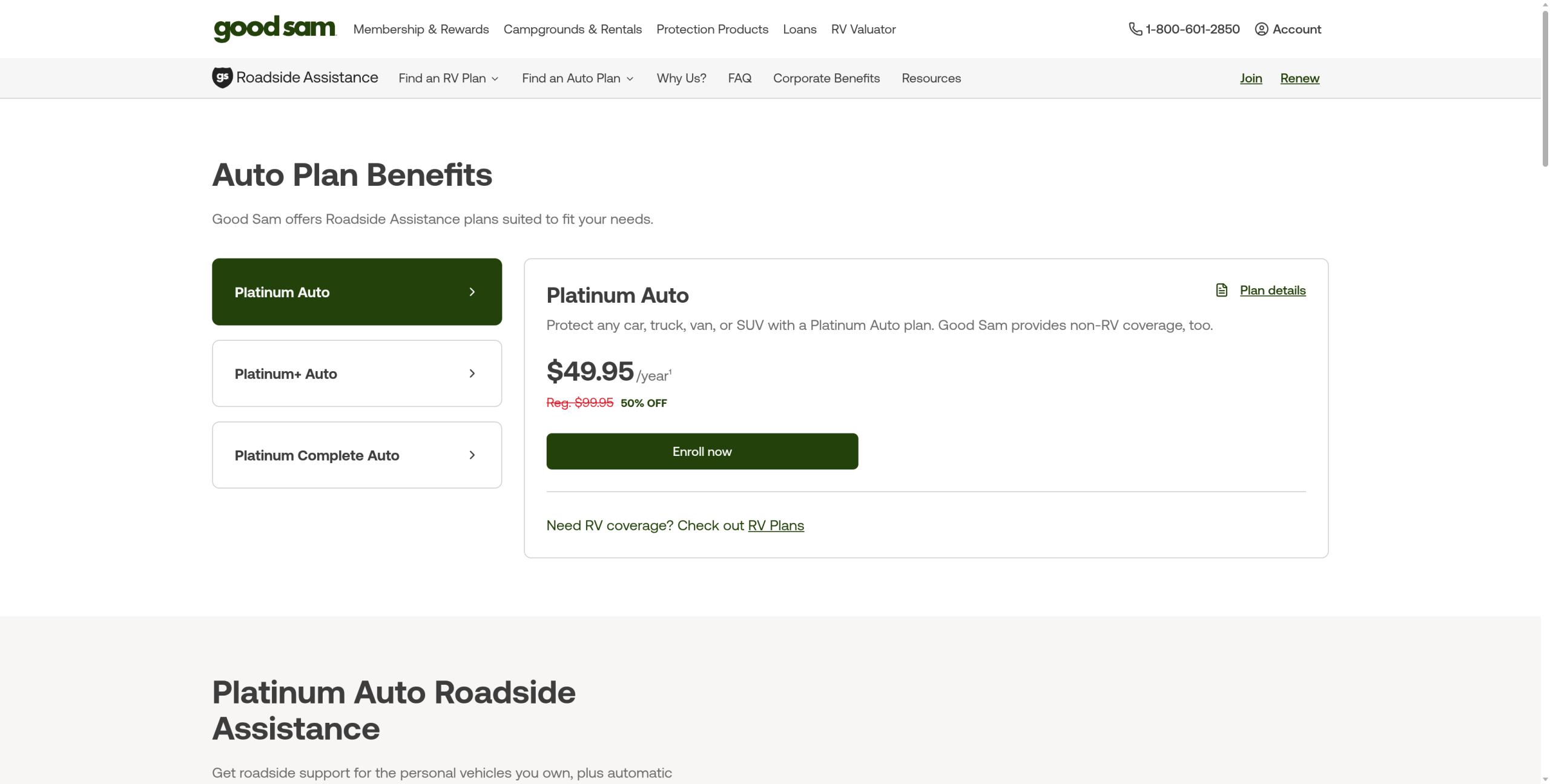
Good Sam built its name on RV coverage, but its auto plans protect any car, truck, van, or SUV, and the standout feature is towing distance. Where insurer add-ons often haul you to the nearest shop, Good Sam plans are geared toward getting you to a destination you actually choose, which is exactly what a stranded EV owner wants when the closest garage cannot service electric cars. If you drive long routes or live far from an EV-capable service center, that reach is the selling point.
- Best for: Drivers who want generous towing distance to a shop of their choosing.
- Pros: Long-distance towing, covers cars as well as RVs, family and vehicle-based options.
- Cons: The brand skews toward RV owners, so read the auto plan details closely.
- Pricing: Auto plans start around $50 for the first year, regularly closer to $100.
4. GEICO Emergency Road Service
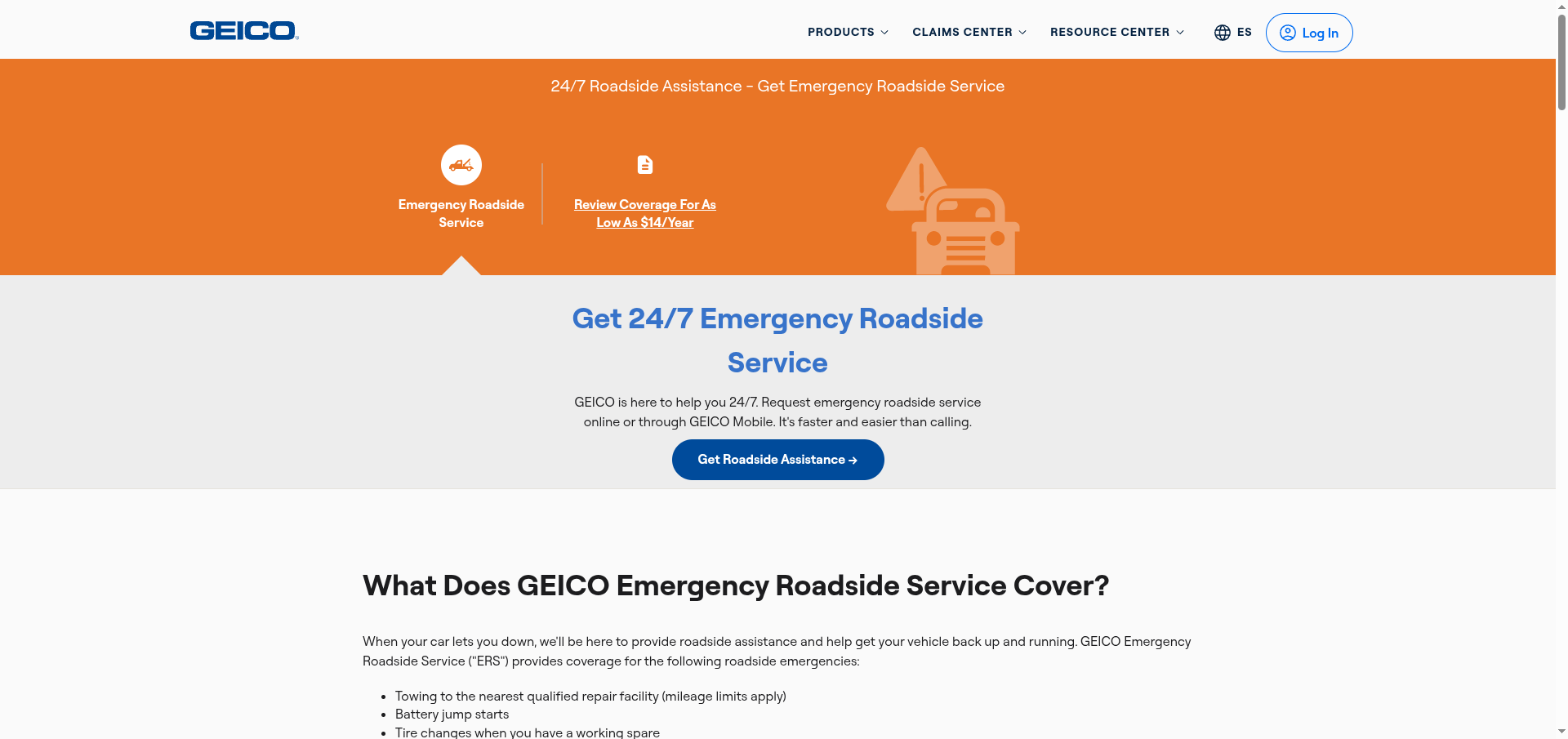
GEICO Emergency Road Service is the budget entry point, added to a GEICO auto policy for a small annual cost. It covers towing, battery jump starts including electric vehicles, tire changes with a working spare, lockouts, and winching near the road. The catch for EV owners is baked into how it works: per GEICO, towing goes to the nearest qualified repair facility and mileage limits apply, and the dispatcher assigns whatever truck is available. Request a flatbed explicitly when you call, and confirm the destination can service EVs.
- Best for: GEICO customers who want the lowest-cost roadside coverage.
- Pros: Very cheap, request through the app, EV battery jump starts included.
- Cons: Tows only to the nearest facility with mileage limits, and you must ask for a flatbed.
- Pricing: An add-on to a GEICO policy, advertised as low as about $14 per year.
5. Progressive Roadside Assistance
Progressive Roadside Assistance is the natural fit if you already insure with Progressive, since it bolts onto your existing policy. The coverage handles towing, winching, jump starts, fuel delivery, lockouts, and flat tires, dispatched through a national network. Like other insurer add-ons, the service sends the nearest available truck and tows toward the closest shop, so an EV owner needs to say up front that the car requires a flatbed. It is convenient and cheap, but it trades away the control a membership gives you over the truck and the tow.
- Best for: Drivers who already have a Progressive auto policy.
- Pros: Easy to add, low cost, request help through the Progressive app.
- Cons: Dispatcher picks the truck, tow distance is limited, and you must specify a flatbed.
- Pricing: An add-on to a Progressive policy, priced with your coverage.
How We Chose These
We started from the EV problem rather than a generic roadside checklist. Every pick had to make it realistic to get a flatbed tow, since an electric car with all four wheels rolling can strain the drivetrain. We weighed how far each plan will tow, because the nearest shop may not service EVs, and we favored options that let you choose the destination or set a generous distance. We looked at whether you can buy the coverage on its own or only as an insurance add-on, the cost, and how you request help. We left out plans that only cover a single scenario or that could not clearly support a flatbed request for an electric vehicle.
This is general information, not automotive or insurance advice. Coverage, towing distances, truck types, and EV handling vary by provider, plan, and location, and only the provider can confirm what applies to your vehicle. Before you rely on any plan, confirm in writing that it will dispatch a flatbed for your specific EV and check the tow-distance limit against where you actually drive.
The Bottom Line
For most EV owners, a membership beats a bare insurance add-on, because it gives you control over the flatbed and the tow. Better World Club is the strongest all-round club with an EV-aware attitude, Allstate Roadside is the best standalone option if you do not want to change insurers, and Good Sam wins when towing distance is your priority. If cost is everything and you already have the policy, GEICO and Progressive are cheap and convenient, as long as you remember to ask for a flatbed and check the mileage limit. Whichever you pick, the deciding question is the same: will they put your electric car on a flatbed, and how far will they take it? For more car and money guidance, see our Autos and Finance & Money sections.
Frequently Asked Questions
What is the best AAA alternative for roadside assistance?
For an EV owner, Better World Club is the best all-round alternative, because it works like a full motor club, covers you in any vehicle, and understands EV needs like flatbed towing and mobile charging. If you want a membership without changing insurers, Allstate Roadside is the top standalone pick, and Good Sam is best when long towing distance matters most. The cheapest routes are the GEICO and Progressive add-ons if you already hold those policies.
Do I need a flatbed to tow an electric car?
Usually yes. Because an electric motor stays connected to the wheels, letting those wheels spin during a tow can feed voltage back into the system and risk drivetrain damage, which is why automakers specify flatbed transport for most EVs. A wheel-lift truck may be acceptable only if it fully lifts the driven wheels off the ground. When in doubt, insist on a flatbed and check your owner’s manual for the exact towing instructions.
Are insurance roadside add-ons good enough for an EV?
They can be, but with caveats. Add-ons from insurers are cheap and convenient, yet they typically tow to the nearest qualified shop with mileage limits and let the dispatcher choose the truck. For an EV, that means you must state clearly that the car needs a flatbed and confirm the destination can service electric vehicles. If you want more control over the tow, a standalone membership is the safer choice.
Which roadside plan has the longest towing distance?
Among these, Good Sam is built around longer tows and choosing your own destination, which suits an EV that needs a specialized shop. Motor club memberships like Better World Club and higher Allstate tiers also offer longer distances than most bare insurer add-ons. Insurance add-ons such as GEICO and Progressive usually tow only to the nearest facility, so check each plan’s distance cap before you rely on it.
Can I get roadside assistance without an insurance policy?
Yes. Motor club memberships from Better World Club and Good Sam are sold on their own, and Allstate Roadside can be purchased even if you do not hold an Allstate policy. Insurance add-ons like GEICO Emergency Road Service and Progressive Roadside Assistance, by contrast, require an active policy with that company. If you do not want to tie roadside coverage to your insurer, a standalone membership is the way to go.

Leave a Reply
You must be logged in to post a comment.