
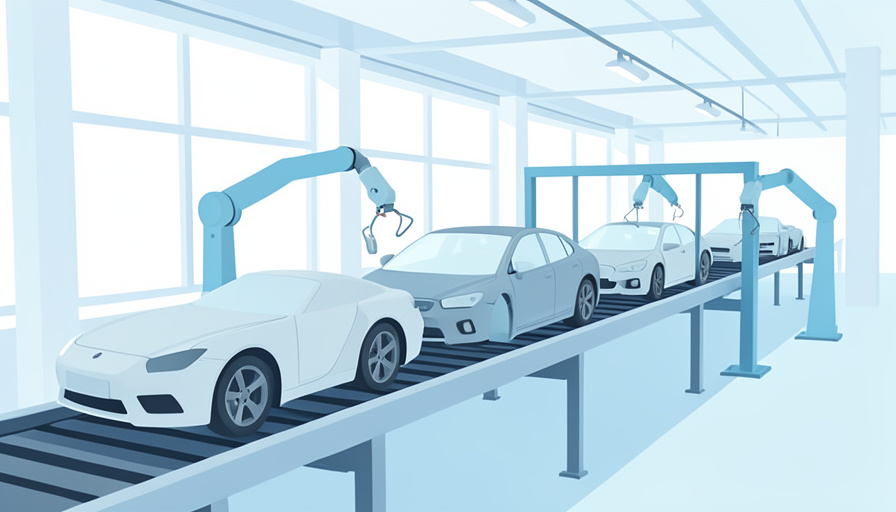
A trade negotiation falling apart sounds like a story for the business page. This one has a way of ending up on your driveway, because the cars built across the US-Canada border are stitched together from parts that cross it again and again.
In late August 2026, trade talks between the United States and Canada broke down, and the sticking point was cars. The US-Canada trade talks collapse killed a proposed deal to ease auto tariffs, and both governments have since moved toward duties as high as 50 percent on each other’s goods. For an industry built on a single, tightly integrated North American supply chain, that is a big deal, and the effects have a decent chance of reaching the sticker price of your next vehicle.
Quick Answer
US-Canada trade talks collapsed in August 2026 over auto tariffs, ending a proposed deal to lower them. The US moved to impose 50 percent tariffs on billions in Canadian goods, with auto duties set to rise further in 2027, and Canada retaliated in kind. Because North American cars rely on parts that cross the border repeatedly, those tariffs stack up and put upward pressure on vehicle prices.
What Actually Collapsed
The two sides had been negotiating a deal that would have lowered auto tariffs to a more manageable level. According to reporting on the breakdown, the talks fell apart in late August 2026, and the disagreement centered on which vehicles would get relief. Canada pushed for tariff breaks that included medium- and heavy-duty trucks, and the US declined to fold those into the cuts.
With no deal, the tariffs went the other direction. The US moved to impose duties of around 50 percent on roughly $20 billion of Canadian goods, with automotive tariffs set to climb to 50 percent in early 2027. Canada’s government responded that it would match the measures, with the prime minister framing the retaliation as dollar-for-dollar. Instead of a truce, the collapse produced an escalation, and the auto sector sits right in the middle of it.
Why Car Prices Are Exposed
Here is the piece that makes this an auto story rather than a general trade story. A car assembled in North America is not built in one country. Its parts, an engine block, a wiring harness, a seat frame, a bit of stamped steel, can cross the US-Canada border several times before the finished vehicle rolls off the line.
That integration is efficient in calm times and painful in a tariff fight. When a component is taxed each time it crosses, the cost does not land once. It compounds along the way, and by the time the vehicle is finished, the tariffs baked into it can add up to real money. As one auto-parts community bluntly put it, the end of the tariff truce is bad news for your next car. The math is not complicated: tax the border a car crosses repeatedly, and you tax the car.
Which Automakers Feel It Most
The exposure is not evenly spread. It falls hardest on companies that build vehicles in Canada for the US market, or that lean heavily on cross-border parts, which is why the breakdown raised the stakes sharply for automakers.
- Automakers with Canadian assembly. General Motors and Ford both run vehicle assembly plants in Canada, which puts specific models directly in the tariff crosshairs.
- Parts suppliers. The thousands of suppliers that ship components across the border operate on thin margins and limited ability to absorb a 50 percent duty.
- Buyers of affected models. The cost pressure eventually flows to whoever buys the vehicles built from the most border-crossed parts.
Automakers have some tools to soften the blow, like shifting production or eating part of the cost to stay competitive. But those moves are slow and expensive, and none of them make a 50 percent tariff disappear.
What It Could Mean for Buyers
Nobody can quote you an exact figure yet, because how much of the tariff reaches consumers depends on choices automakers have not finished making. That said, the direction is fairly clear, and a few effects are worth watching:
- Upward price pressure. Tariffs raise input costs, and some of that tends to reach sticker prices, especially on models heavy with cross-border content.
- Uneven impact by model. A vehicle assembled and sourced mostly within one country is less exposed than one that shuttles parts across the border repeatedly.
- A used-car ripple. When new-car prices climb, demand often shifts to used vehicles, which can firm up used prices too.
- Timing uncertainty. With automotive tariffs set to rise further in 2027, the pressure may build over time rather than arrive all at once.
What Happens Next
The near-term picture is an escalation with no clear off-ramp. Automotive tariffs are scheduled to step up at the start of 2027, retaliation is in place on both sides, and the integrated supply chain that made North American car-building cheap is now a liability that companies are scrambling to rework. There is also a competitive wrinkle: other trading partners, including Mexico, are watching the standoff and positioning around it.
Trade fights can also de-escalate as fast as they start, so none of this is locked in. But planning around a quick resolution would be optimistic. For now, the sensible read is that cross-border auto costs are rising, automakers are adjusting, and buyers should expect the pressure to show up gradually in prices rather than vanish.
At a Glance
- US-Canada trade talks collapsed in August 2026 over auto tariffs, ending a proposed deal to lower them.
- The US moved to 50 percent tariffs on about $20 billion of Canadian goods, with auto duties set to rise in 2027, and Canada retaliated in kind.
- North American cars use parts that cross the border repeatedly, so tariffs compound into the finished vehicle’s cost.
- Automakers with Canadian assembly, like GM and Ford, and cross-border parts suppliers are most exposed.
- Buyers should expect gradual upward price pressure, uneven by model, with a possible ripple into used-car prices.
Frequently Asked Questions
Why did US-Canada trade talks collapse?
The talks broke down in late August 2026 over auto tariffs. The two sides had been negotiating to lower them, but disagreed on scope, with Canada seeking relief that covered medium- and heavy-duty trucks and the US declining to include those vehicles. With no agreement, both sides moved toward higher tariffs instead.
Will car prices go up because of the tariffs?
There is real upward pressure, though the exact amount is not settled. Tariffs raise the cost of parts that cross the border, and those costs compound in vehicles built from heavily cross-border components. How much reaches buyers depends on how automakers absorb or pass along the added cost.
Which car companies are most affected?
Automakers that assemble vehicles in Canada for the US market, including General Motors and Ford, face direct exposure, as do the many parts suppliers that ship components across the border. Models built largely within one country are less exposed than those relying on repeated border crossings.
Are the tariffs permanent?
No. Tariffs are policy measures that can be raised, lowered, or negotiated away. Automotive duties are scheduled to increase in early 2027 under current plans, but trade disputes can de-escalate quickly, so the situation may change with further negotiations.
What This Means
The collapse of the US-Canada trade talks turned a supply chain that quietly made cars cheaper into a line item that could make them pricier. The mechanics are unglamorous but decisive: parts cross the border, tariffs tax each crossing, and the total lands in the price of the finished car. Whether it stays that way depends on politics no car buyer controls. What a buyer can do is watch which models carry the most cross-border content, understand that the pressure is likely to build into 2027, and factor a possible bump into any near-term purchase. For more coverage, see ShoutPost’s Autos and Business sections.



Leave a Reply
You must be logged in to post a comment.