
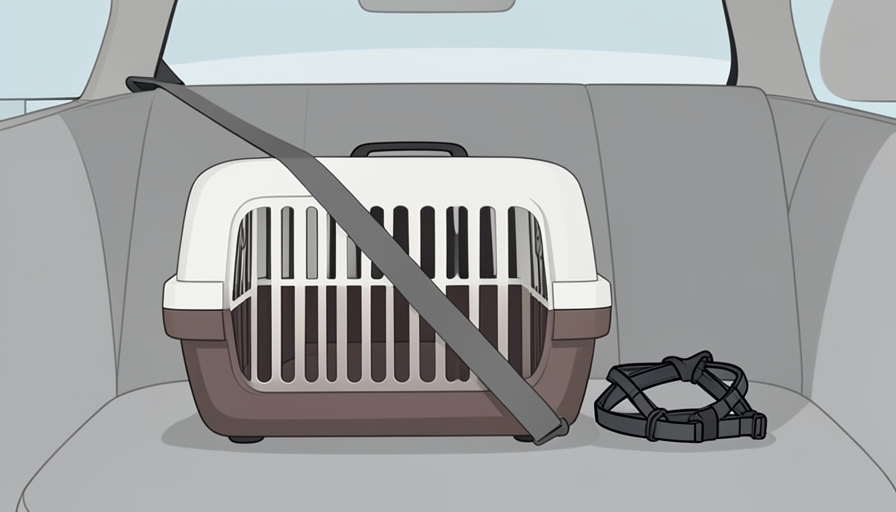
The dog rides shotgun with his head out the window, or the cat roams free in the back. It looks sweet, and it is a crash waiting to happen. An unsecured pet is a projectile in a sudden stop, a distraction for the driver, and an escape risk the moment a door opens. Securing them is simple once you know the rules.
Traveling with a pet by car is easy to get wrong in ways that feel normal, because a loose animal in the cabin is so common that it looks safe. Veterinarians see the results, and an unrestrained pet is one of the most preventable travel injuries there is. Here is how to travel safely with a cat or dog, from the right restraint to the prep that keeps the trip calm.
In Brief
Cats should always ride in a carrier that is buckled onto the back seat or wedged on the floor so it cannot slide. Dogs need a crash-tested harness clipped to a seat belt or a secured crate, never loose, on a lap, in the front seat with airbags, or in an open truck bed. Prep with a vet visit for long trips, carrier acclimation, and a light meal beforehand, and never leave a pet in a parked car.
Why a Loose Pet Is So Dangerous
Start with why this matters, because the risk is easy to underestimate. In even a modest collision or hard brake, an unrestrained animal is thrown forward at speed, which can injure the pet and the people in the car. A pet loose in the cabin also distracts the driver, and it can bolt through an open door at a stop or after a crash, straight into traffic.
This is exactly the kind of injury that almost never had to happen. A secured pet stays put in a sudden stop, cannot interfere with the pedals or the driver, and cannot escape when you open the door. The fix costs less than the vet bill for the alternative.
Cats: Always in a Secured Carrier
Cats should travel in a carrier, every time, with no exceptions for a “calm” cat. A frightened cat loose in a car will hide under the pedals or claw toward any opening, which is dangerous for everyone.
Secure the carrier so it cannot move. The American Veterinary Medical Association advises buckling the carrier onto the back seat with the seat belt, or wedging it on the floor behind a front seat so it cannot slide or tip. A carrier that is anchored keeps the cat contained, calmer, and unable to escape during the drive or at rest stops.
Dogs: A Crash-Tested Harness or a Crate
Dogs have more options, but the principle is the same: they must be restrained. The two safe choices are a crash-tested harness clipped to the seat belt, or a secured travel crate.
Not all products are equal, so look for restraints independently crash-tested for pet safety, using a protocol adapted from the same federal standard as child safety seats. Then avoid the common mistakes: keep dogs out of the front passenger seat where an airbag can injure them, never let a dog ride on the driver’s lap, and never carry a dog loose in an open truck bed. A big, friendly dog with his head out the window is a lovely image and a serious risk.
Prep Before the Trip
A safe trip starts before you leave the driveway, especially for longer journeys.
- See the vet for long trips. A checkup, ideally a month or so ahead, confirms your pet is fit to travel and covers any health paperwork you need for crossing borders.
- Acclimate to the carrier or harness. Let your pet explore it at home for days beforehand, with treats and a familiar blanket or toy inside, so it is not a scary surprise on travel day.
- Feed a light meal early. A small meal three to four hours before departure reduces car sickness compared with a full stomach or an empty one.
- Ask about motion sickness or anxiety. For anxious pets or long drives, your vet can recommend anti-nausea or calming medication, which works better than guessing with over-the-counter options.
On the Road
A few habits during the drive keep everyone safe. Never leave your pet alone in a parked car, where temperatures turn dangerous fast even on mild days. On long trips, offer small amounts of water and take breaks, but keep the pet leashed or in the carrier whenever a door is open, since rest stops are a classic escape moment.
Make sure your pet wears ID and is microchipped before you travel, so a bolt at a strange gas station does not become a lost pet. And resist the urge to let them out “just for a second” unsecured. The whole system only works if the pet is contained until you are somewhere safe and enclosed.
What To Know
- An unrestrained pet is a projectile in a crash, a driver distraction, and an escape risk, and it is a preventable injury.
- Cats should always ride in a carrier buckled to the back seat or wedged on the floor so it cannot move.
- Dogs need a crash-tested harness on the seat belt or a secured crate, never loose, on a lap, or in an open truck bed.
- Prep with a vet visit for long trips, carrier acclimation, a light early meal, and vet-recommended anxiety or nausea meds.
- Never leave a pet in a parked car, keep them secured whenever a door opens, and make sure they have ID and a microchip.
Frequently Asked Questions
Do cats really need a carrier in the car?
Yes, always. A loose cat can hide under the pedals, panic, or escape when a door opens, all of which are dangerous. Keep the cat in a carrier that is buckled onto the back seat or wedged on the floor behind a front seat so it stays put and the cat stays contained.
What is the safest way to restrain a dog in a car?
A crash-tested harness clipped to the seat belt, or a secured travel crate. Look for products independently crash-tested by the Center for Pet Safety. Keep dogs out of the front seat with an airbag, off the driver’s lap, and never in an open truck bed, all of which are common and serious risks.
How do I keep my pet from getting car sick?
Feed a light meal three to four hours before you leave rather than a full or empty stomach, and keep the pet secured and facing forward. For pets that struggle, ask your veterinarian about anti-nausea or calming medication, which is usually more effective than over-the-counter remedies.
Can I leave my pet in the car for a few minutes?
No. A parked car heats up dangerously fast, even on mild days and with windows cracked, and it can become deadly within minutes. Never leave a pet alone in a parked car. Plan stops where your pet can come with you or stay safely at your destination.
Practical Takeaway
Traveling with a pet safely comes down to one rule with two versions: cats in a secured carrier, dogs in a crash-tested harness or crate, always restrained and never loose. Add a little prep, a vet check for long trips, carrier acclimation, a light meal, and the ride is calmer for the animal and safer for everyone in the car. The loose-pet habits that look normal are the ones vets wish more owners would drop. For more coverage, see ShoutPost’s Family & Personal and Travel sections.
This article is general pet-safety information, not veterinary advice. Talk to your veterinarian about your specific pet’s health, travel fitness, and any medication before a trip.




Leave a Reply
You must be logged in to post a comment.