
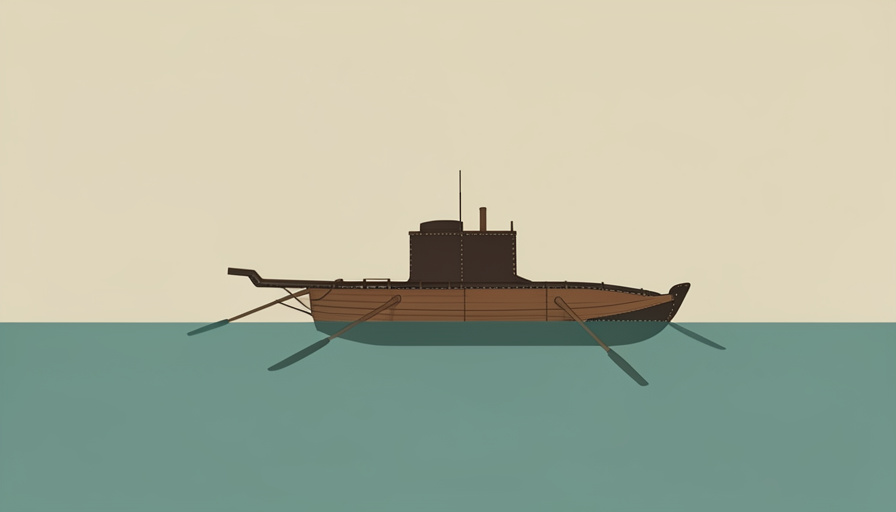
Somewhere around 1620, on a stretch of the River Thames that thousands of Londoners cross without a second thought, a wooden boat wrapped in greased leather slipped under the water, stayed down for a couple of hours, and came back up with everyone inside alive. This was more than a century before anyone properly understood what air was made of. The fact keeps going viral, and it is even better than the headline.
Every so often the Cornelis Drebbel submarine River Thames story resurfaces online, usually as a “today I learned” post that people refuse to believe. A working submarine in the 1620s? Rowed by hand, under London, possibly with a king aboard? It sounds invented. It mostly is not. Here is what actually happened, what is solid history, and what is the kind of great story that historians handle with tongs.
At a Glance
Cornelis Drebbel was a Dutch inventor working in England under the patronage of King James I. Around 1620 to 1624 he built and tested the first navigable submarine, a wooden rowboat sealed inside greased leather, on the Thames between Westminster and Greenwich. It reportedly stayed submerged for a few hours at a depth of roughly 12 to 15 feet. Accounts say King James himself took a dive, which would make him the first monarch to travel underwater, though that particular detail is more tradition than hard record.
Who Was Cornelis Drebbel?
Drebbel was a Dutch engraver turned inventor and alchemist, born in Alkmaar in 1572, who ended up in the orbit of European royalty on the strength of his gadgets. He built early thermostats, self-regulating furnaces, optical instruments, and a “perpetual motion” clock that dazzled the courts of the day. By the 1600s he was in England, working under the patronage of King James I, the kind of court inventor kings kept around to produce wonders.
The Encyclopaedia Britannica entry on Drebbel credits him with building the first practical submarine while in English service. He was a showman as much as an engineer, and the submarine was his headline act.
How the Submarine Actually Worked
Forget steel and portholes. Drebbel’s craft was a wooden rowing boat with a raised frame over the top, and the whole thing was wrapped in leather that had been greased to keep the water out. Oars poked through the sides, sealed at the holes with tight leather flaps so a crew could actually row while submerged.
To go down, the design used goatskin bladders inside the hull. Open them to let water in and the boat sank; squeeze the water back out and it rose again, the same basic idea as the ballast tanks in a modern submarine, worked by hand. The reports of the day describe a vessel travelling at a depth of around 12 to 15 feet from Westminster down to Greenwich, staying under for a couple of hours before surfacing. He is said to have built three versions over a few years, each one larger than the last, with the biggest able to carry a dozen or more people.
The Problem Nobody Should Have Solved Yet: Air
The truly startling part is not that the boat floated or sank. It is that people breathed. A sealed hull full of rowers uses up its air fast, and in the 1620s nobody knew what air even was. Oxygen would not be formally identified for another 150 years.
Some accounts have Drebbel running air tubes up to the surface, held up by floats, which is plausible for shallow depths. But the stranger claim, described in a Londonist history of the Thames dives, is that he refreshed the air chemically, heating a mineral he called the “quintessence” or fifth element of the air to keep the atmosphere breathable. Historians of science think he was probably heating saltpeter, which releases oxygen when heated. If so, Drebbel may have been generating oxygen and using it to keep a crew alive underwater, long before anyone had a name for the gas. That claim is debated, and it should be, but even the debate is remarkable.
Did a King Really Go Under?
Here is where the great story needs a gentle handrail. The most repeated version says James I climbed aboard for a test dive, making him the first ruler in history to travel underwater. It is a wonderful line, and outlets like Historic UK’s write-up of the episode repeat it.
The catch is that the royal dive comes from later accounts rather than an airtight contemporary record, so serious historians tend to file it under “reported” rather than “confirmed.” What is well attested is that the submarine existed, ran on the Thames, and drew crowds. Whether the king personally got his feet wet is the part to enjoy without swearing to it. That gap between a solid fact and a beloved embellishment is exactly how a lot of history works, and knowing the difference makes the real achievement stand out more, not less.
Why This Keeps Going Viral
The story hits a sweet spot online. It is genuinely true at its core, it sounds impossible, and it collides with the assumption that people 400 years ago were somehow less clever than us. A hand-rowed leather submarine under London, built by a court inventor for a king, is the kind of fact that feels made up precisely because it is so far ahead of its time.
It also travels well because the setting is a place people know. The Thames is not a distant curiosity; it is the river running through the middle of a city millions have visited. Learning that its water once closed over the first working submarine turns an ordinary stretch of river into something a little uncanny, which is why the fact refuses to stay buried.
Where to Meet the Story in London
If the tale sends you looking, the geography is easy to follow. The dives ran between Westminster and Greenwich, both of which are straightforward to visit and pleasant to reach by boat, which is a fitting way to travel given the subject. Greenwich in particular is the natural home base for maritime history in London.
The National Maritime Museum at Royal Museums Greenwich is the obvious anchor for the wider story of Britain and the sea, and the riverside walk between the old royal sites gives you the exact water Drebbel’s crew rowed beneath. There is no surviving submarine to gawk at, but standing on the bank and picturing a leather boat sinking out of sight in front of a Jacobean crowd is its own small thrill. For planning a trip around it, our Travel and Education sections are good places to start.
What Matters Most
- Cornelis Drebbel, a Dutch inventor working for King James I, built the first navigable submarine around 1620 to 1624.
- It was a wooden rowboat sealed in greased leather, with oars through sealed ports and goatskin bladders acting as hand-worked ballast tanks.
- It ran on the Thames between Westminster and Greenwich, reportedly submerged for a couple of hours at 12 to 15 feet.
- Drebbel may have refreshed the air by heating saltpeter, effectively using oxygen well before the gas was formally identified.
- The claim that King James rode it is traditional and widely repeated, but not firmly documented, so treat the royal dive as a good story rather than settled fact.
Frequently Asked Questions
Who really invented the first submarine?
The first navigable, working submarine is credited to Cornelis Drebbel, a Dutch inventor working in England, who built and tested it on the River Thames around 1620 to 1624. Earlier designs and sketches existed, but Drebbel’s was the first that people actually rowed underwater and resurfaced from.
How did a 1600s submarine keep people breathing?
Partly through air tubes floated to the surface for shallow dives. More strikingly, Drebbel is reported to have heated a mineral, likely saltpeter, which releases oxygen, to refresh the air inside the hull. If accurate, that means he was using oxygen to sustain a crew roughly 150 years before the gas was formally identified.
Did King James I actually travel underwater?
According to widely repeated accounts, yes, which would make him the first monarch to go underwater. That detail comes from later retellings rather than an ironclad contemporary record, so historians treat it as traditional rather than proven. The submarine and its Thames dives themselves are well attested.
Can I see Drebbel’s submarine today?
No original survives, and there is no confirmed full replica on permanent public display. The best way to connect with the story is to visit the Thames between Westminster and Greenwich, where the dives took place, and the maritime history collections at Royal Museums Greenwich for the broader context.
Closing Thoughts
The Drebbel submarine is one of those facts that sounds like a hoax and turns out to be roughly true, which is the best kind. A hand-rowed leather boat carried people under the Thames four centuries ago, its inventor may have quietly harnessed oxygen without knowing its name, and a king may or may not have come along for the ride. Strip away the embellishments and the real story is still astonishing. Next time you cross the river in London, it is worth remembering what once passed beneath it.




Leave a Reply
You must be logged in to post a comment.