

Five tax programs that handle 1099 and Schedule C income for far less than TurboTax, without the checkout-line surprise.
Here is the gig-worker tax trap: your income lands on a 1099 or nothing at all, which pushes you into a Schedule C, and Schedule C is exactly the point where TurboTax reveals its priciest self-employed tier, often after you have already entered everything. You feel locked in, so you pay. You are not locked in. Several tax programs handle self-employment income cleanly, show their prices up front, and cost a fraction of TurboTax, with two of them filing your federal return for nothing. Here are five worth switching to before next April.
The best TurboTax alternatives for gig workers in 2026 are:
- FreeTaxUSA: best overall value
- Cash App Taxes: best fully free option
- TaxSlayer Self-Employed: best guided mid-price pick
- TaxAct Self-Employed: best deduction walkthrough
- H&R Block Self-Employed: best with in-person backup
Quick Picks
| Software | Best for | Federal price | State price | Schedule C |
|---|---|---|---|---|
| FreeTaxUSA | Overall value | $0 | ~$15 | Yes |
| Cash App Taxes | Filing free | $0 | $0 | Yes |
| TaxSlayer Self-Employed | Guided filing | ~$75 | Extra | Yes |
| TaxAct Self-Employed | Deduction help | ~$110 | ~$65 | Yes |
| H&R Block Self-Employed | In-person backup | ~$130 | ~$49 | Yes |
Table of Contents
Whichever you choose, remember the rule the IRS is clearest about: gig income is taxable even when no form reports it. The IRS Gig Economy Tax Center states you must report what you earned whether or not it showed up on a 1099-K, so the software’s job is to organize it, not to decide what counts.
1. FreeTaxUSA
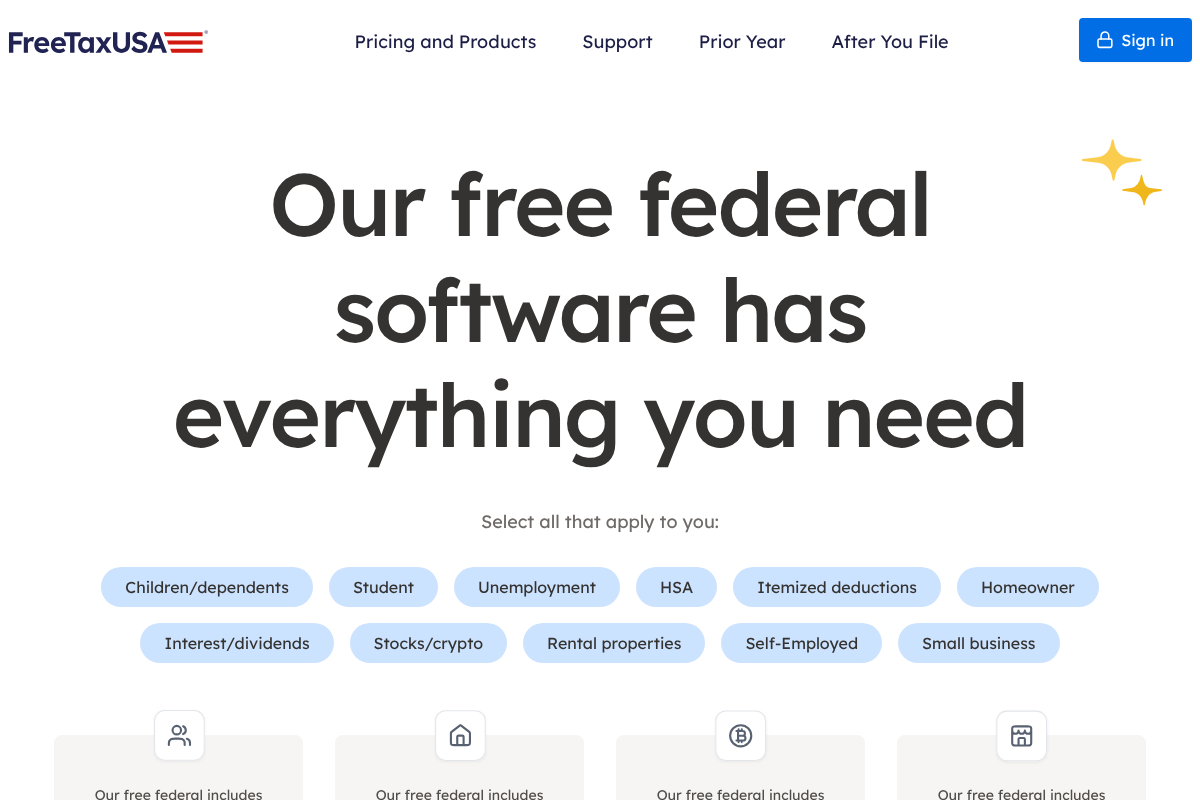
Best for: Gig workers who want to file a full Schedule C for almost nothing and hate surprise fees.
FreeTaxUSA is the answer to the TurboTax price trap. Federal filing is free for everyone, including self-employment income and a Schedule C, and a state return costs about $15. There is no separate, pricier tier that unlocks when you add gig income, which is the whole reason it lands at the top of this list.
The interface is plainer than TurboTax and the hand-holding is lighter, but it walks you through 1099 income, business expenses, and self-employment tax without hiding anything. Prices are shown up front, so nothing jumps at the checkout screen. If you are reasonably comfortable entering your own numbers, this is the best value in tax software, full stop.
- Pros: Free federal including Schedule C, transparent pricing with no mid-flow upsells, cheap state filing.
- Cons: Plainer interface, lighter guidance than the premium names, support is not as hand-holding.
Pricing: $0 federal, about $15 per state.
2. Cash App Taxes
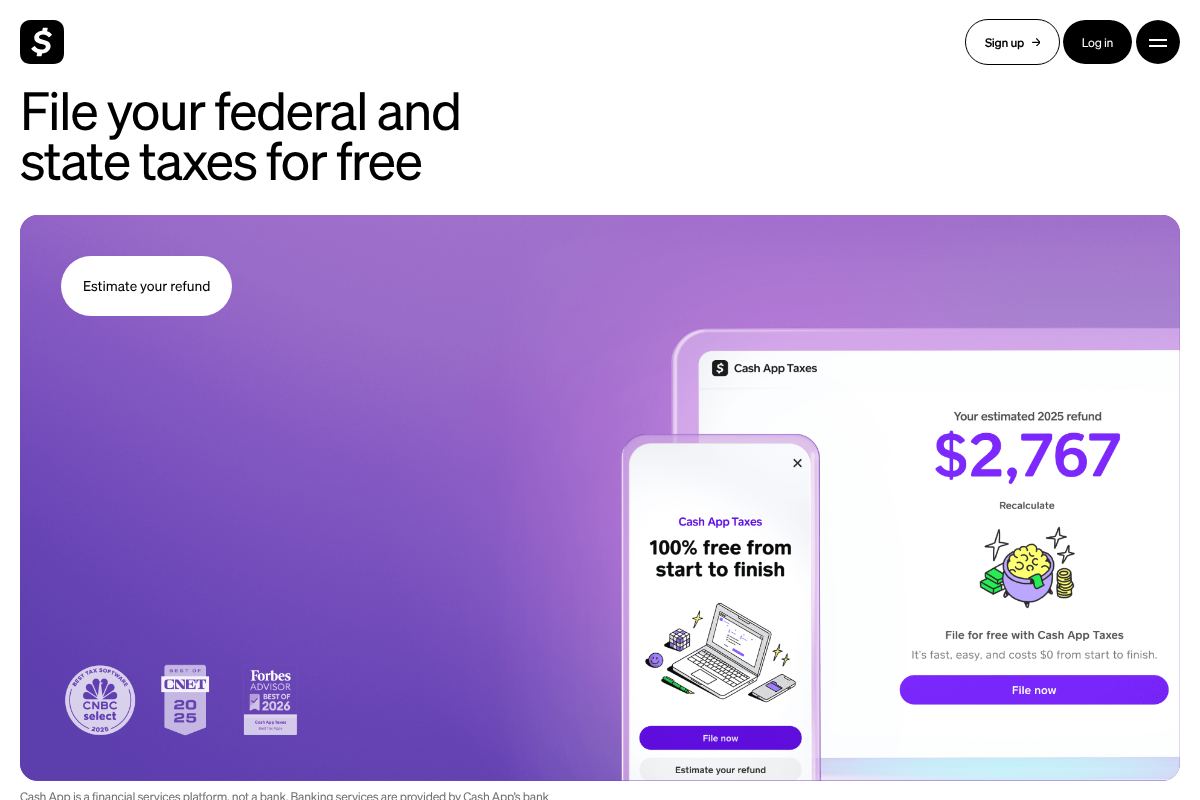
Best for: Confident filers who want to pay absolutely nothing for federal and state.
Cash App Taxes is the only option here that is free for both federal and state returns, with Schedule C support included. For a gig worker with a straightforward return, that is a genuinely unbeatable price, and it covers self-employment income and common deductions.
The catch is guidance: it offers the least hand-holding of any option on this list, so it suits someone who already understands their return rather than a first-time Schedule C filer. You also need a Cash App account, and the experience leans mobile. If your taxes are simple and you know your way around a 1099, it is hard to argue with completely free.
- Pros: Free federal and state, Schedule C included, no upsells because there is nothing to sell.
- Cons: Minimal guidance, requires a Cash App account, weaker fit for complex returns.
Pricing: $0 federal and $0 state.
3. TaxSlayer Self-Employed
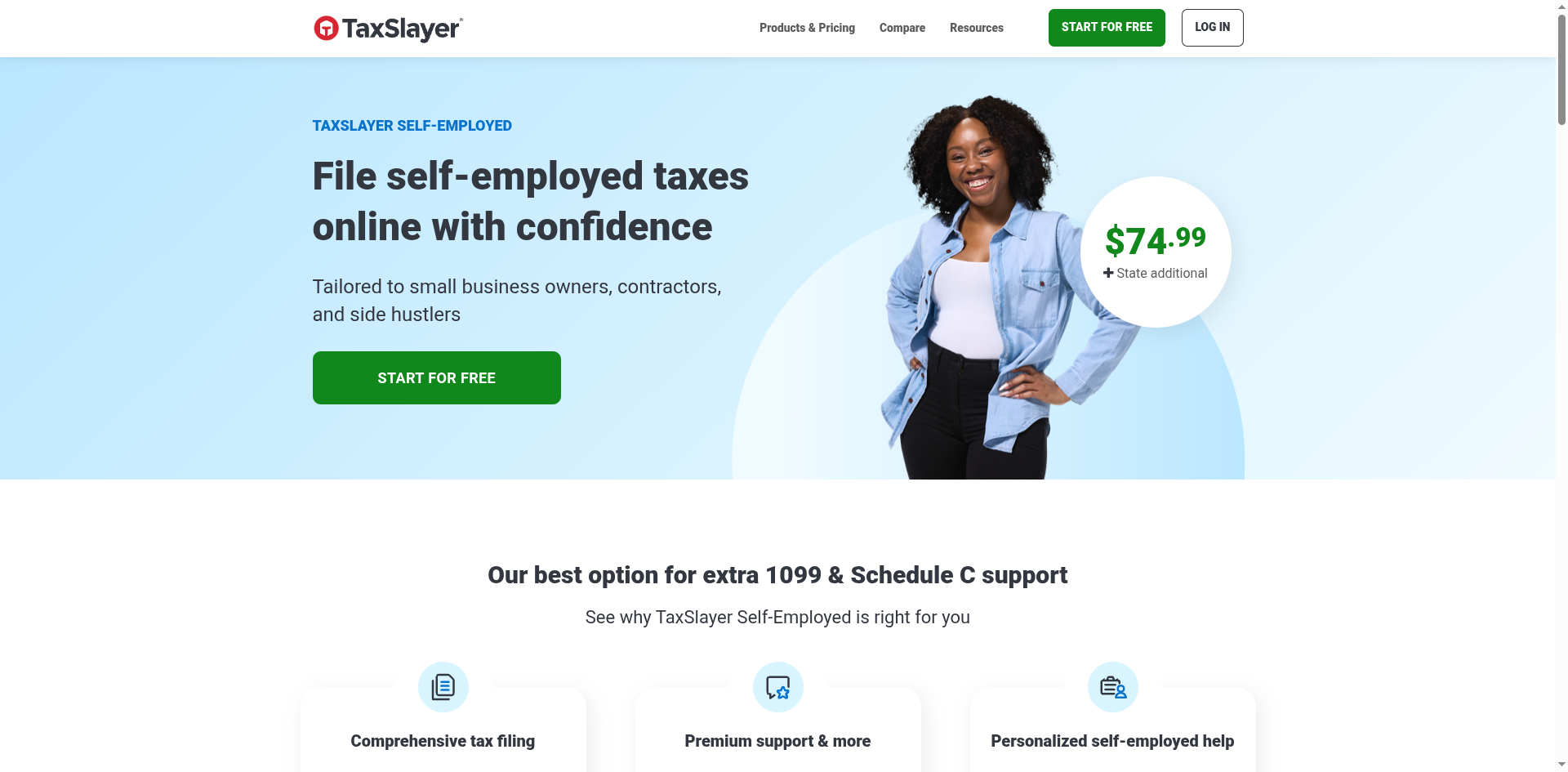
Best for: Gig workers who want real guidance for 1099 income without TurboTax pricing.
TaxSlayer Self-Employed is the middle ground: more guidance than the free options, much less cost than TurboTax. At around $75 for federal, it is built for contractors and side hustlers, with extra 1099 and Schedule C support, deduction guidance, and self-employment-specific help.
It is the pick when you want a program that actively walks you through gig deductions and estimated taxes but do not want to hand TurboTax well over a hundred dollars for the privilege. The state fee is extra, and the interface is less slick than the market leader, but for a self-employed filer who values guidance over the rock-bottom price, it hits a sensible balance.
- Pros: Solid self-employed guidance, cheaper than TurboTax, good 1099 and Schedule C support.
- Cons: Not free, state filing costs extra, interface trails the premium brands.
Pricing: About $75 federal, state extra.
4. TaxAct Self-Employed
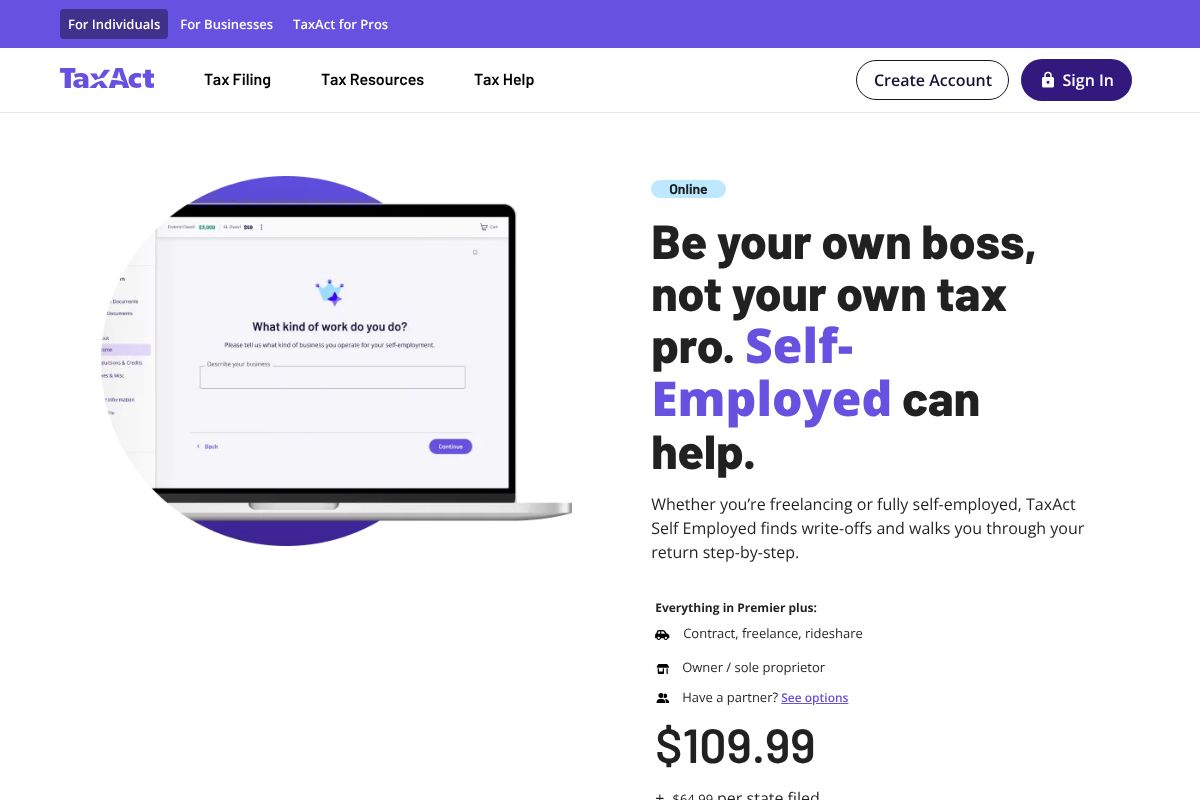
Best for: Freelancers who want a step-by-step deduction finder and are newer to Schedule C.
TaxAct Self-Employed leans into walking you through write-offs, asking what kind of work you do and surfacing deductions specific to contract, freelance, and rideshare income. For someone still learning what they can deduct, that guided approach reduces the odds of leaving money on the table.
At around $110 federal plus roughly $65 per state, it is priced between the guided mid-tier and TurboTax, so it is not the cheapest choice. What you pay for is the deduction hand-holding and a step-by-step flow that is friendlier than the bare-bones free options. If confidence with self-employment deductions is your weak spot, that trade can be worth it.
- Pros: Strong step-by-step deduction guidance, good for Schedule C beginners, clear self-employed flow.
- Cons: Pricier than the value picks, state filing adds a notable fee.
Pricing: About $110 federal, roughly $65 per state.
5. H&R Block Self-Employed
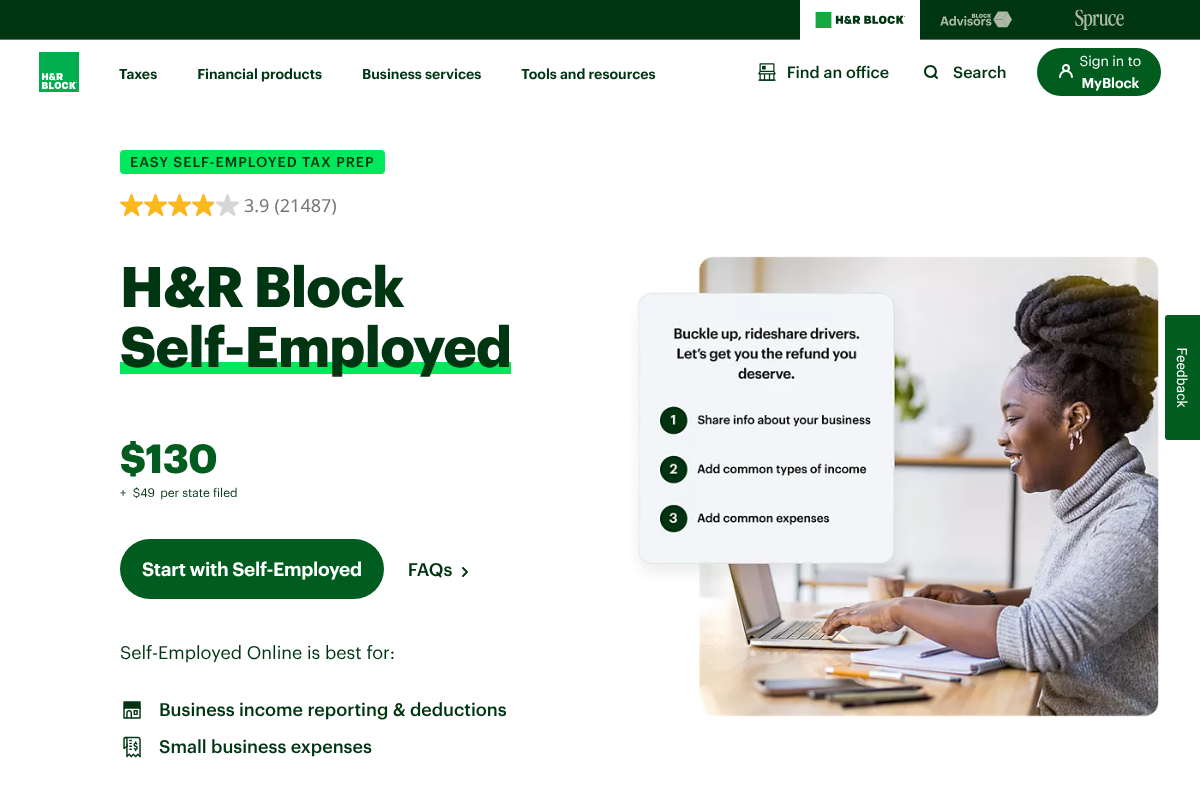
Best for: Gig workers who want the option to hand off to a human at a local office.
H&R Block Self-Employed is the closest TurboTax substitute in feel, with a polished flow, solid support, and strong handling of business income and expenses. Its distinctive advantage is the physical footprint: if your gig taxes get complicated, you can start online and finish with a tax pro at a nearby office.
At around $130 federal plus about $49 per state, it is the priciest option here and roughly in TurboTax territory, so you are not choosing it to save the most money. You choose it for the safety net, the brand familiarity, and the in-person fallback, which is reassuring for a first serious self-employment return. For pure cost, the picks above beat it; for peace of mind with a backup plan, it earns its place.
- Pros: Polished experience, strong support, in-person office backup, good self-employed coverage.
- Cons: Most expensive on this list, close to TurboTax pricing, overkill for a simple 1099 return.
Pricing: About $130 federal, roughly $49 per state.
How We Chose These
Every option here had to do the one thing gig workers need: handle self-employment income on a Schedule C, including 1099 earnings and business deductions, without forcing you into a mystery upgrade. We weighted price transparency heavily, favoring software that shows its cost up front rather than revealing the self-employed tier at checkout, since that surprise is the main reason people leave TurboTax. Value mattered next, so the list runs from completely free to full-service, letting you match spend to how complex your return is and how much guidance you want. We also considered how well each program explains gig-specific items like the self-employment tax and common write-offs, and whether it fits a confident do-it-yourselfer or someone filing a Schedule C for the first time. Finally, we noted where a human backup exists, because a first self-employment return can raise questions software alone will not answer.
This article is general information, not tax advice. Tax software prices, features, and free-filing eligibility change, and your situation may differ. Confirm current pricing on each provider’s site, and consult the IRS or a qualified tax professional for guidance specific to your return.
The Bottom Line
For most gig workers, FreeTaxUSA is the smart default: it files a full Schedule C for free federally with no upsell games. If your return is simple and you are confident, Cash App Taxes files both federal and state for nothing. Step up to TaxSlayer Self-Employed when you want real guidance at a fair price, TaxAct when you are newer to deductions and want a step-by-step walkthrough, and H&R Block when the option to finish with a human at a local office is worth the higher price. Any of them beats paying TurboTax rates for the same Schedule C. For more money guidance, see our Finance & Money and Business sections.
Frequently Asked Questions
What is the best TurboTax alternative for gig workers?
For most gig workers, FreeTaxUSA is the best alternative, since it files a full Schedule C for free at the federal level, charges about $15 per state, and shows its pricing up front with no self-employed upsell. If you want both federal and state completely free and are comfortable with your return, Cash App Taxes is the top no-cost pick.
Can I file self-employment taxes for free?
Yes. Cash App Taxes files both federal and state returns free, including Schedule C, and FreeTaxUSA files federal free with a low state fee. Both handle 1099 income and business deductions. The trade-off is lighter guidance than paid software, so free filing suits people reasonably comfortable entering their own gig income and expenses.
Do I need to report gig income if I didn’t get a 1099?
Yes. The IRS is explicit that gig income is taxable whether or not it appears on a 1099-K or other form. You are responsible for reporting all self-employment earnings on your return, so keep your own records of income and expenses. Any of these programs will let you enter income that no form reported.
Why is TurboTax so expensive for self-employed filers?
TurboTax reserves Schedule C and self-employment features for its highest-priced tier, and that price often appears only after you have entered your information, which feels like a trap. The alternatives here either include self-employment support at a much lower price or free, and show the cost before you start, which is why gig workers switch.
Which tax software is easiest for a first-time Schedule C filer?
TaxAct Self-Employed and H&R Block Self-Employed offer the most guided, step-by-step walkthroughs, surfacing deductions and explaining self-employment items as you go, which suits a first-timer. They cost more than the free options, but the extra hand-holding can prevent mistakes and missed write-offs on an initial self-employment return.




Leave a Reply
You must be logged in to post a comment.