
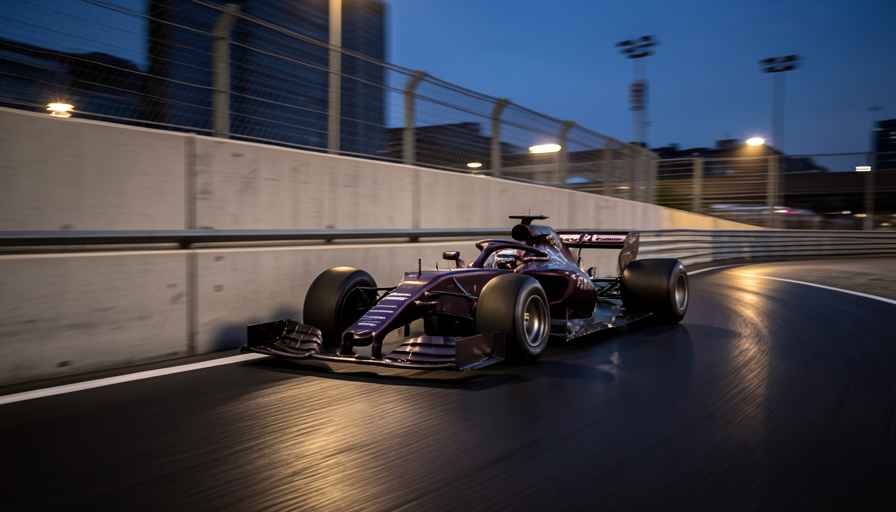
A driver can nail the lap, bank the time, and still lose it hours later over a number no one in the grandstand can see. Here is how F1’s fuel-flow rule works and why it keeps biting.
Few penalties in Formula 1 feel as strange to a casual viewer as a fuel-flow disqualification. The car looked fine. The lap counted. Then, long after the checkered flag on qualifying, the stewards delete the time and drop the driver to the back of the grid. No crash, no obvious cheating, just a sensor reading that crept over a limit. If you have ever watched that unfold and wondered what actually happened, this is the rule to understand.
Pierre Gasly is the name most tied to it. He was thrown out of qualifying at Baku for a fuel-flow breach in 2019, driving for Red Bull, and again at the same circuit in 2024 with Alpine. Same rule, same city, five years apart. That repeat is a good way into why this limit exists and why teams can trip over it even when they are not trying to gain anything.
In Brief
Formula 1 caps how fast an engine can burn fuel at 100 kilograms per hour. An FIA sensor in the tank measures it constantly. Go over the limit, even briefly, and the car has broken a technical rule, which usually means disqualification from that session. It does not matter whether the breach made the car faster. The rule is absolute, so the penalty follows the reading, not the lap time.
Table of Contents
What F1’s Fuel-Flow Limit Actually Is
The rule is simpler than it sounds. Since the turbo-hybrid engines arrived in 2014, F1 has limited how much fuel an engine may burn per hour, not how much it carries. The ceiling is 100 kilograms per hour of fuel mass flow. Think of it as a tap that can only open so far, no matter how hard the driver pushes.
The point of the cap is to stop teams from chasing power by simply dumping in more fuel. If everyone is held to the same maximum flow, engine gains have to come from efficiency, which is the whole idea behind the hybrid era. So the limit is less about safety and more about keeping the power contest honest.
Worth knowing: the limit is on the rate of flow, measured instant to instant, not an average across the lap. A car can sit under the line for almost the entire lap and still fail if the flow spikes past 100 kg/h for a fraction of a second. That detail is where a lot of the confusion, and a lot of the disqualifications, come from.
How the FIA Catches a Breach
Every car runs an FIA-approved fuel-flow sensor fitted in the fuel system. It is a standard, homologated part, the same type for everyone, and it reports the flow rate to race control many times a second. Teams see their own live data too, so a driver is not usually surprised on track. The trouble shows up in the numbers afterward.
When the sensor logs a rate above the limit, the technical delegate flags it and refers the car to the stewards. The team gets to explain, but the reading is the evidence. In Gasly’s 2024 Baku case, Alpine argued that a brief technical fault caused a transient spike in flow, that it lasted only a moment, and that it gave no lap-time benefit. The stewards accepted the explanation of what happened. They disqualified him anyway.
Why “It Gave No Advantage” Never Works
This is the part that frustrates fans most, so it is worth being blunt about it. In F1, a technical breach does not come with a “but it did not help” defense. The car either complied with the regulations or it did not, and the fuel-flow rule is written as a hard limit.
The stewards lean on a principle baked into the International Sporting Code: it is a competitor’s job to keep the car legal at all times, and the burden sits with the team, not the officials. A genuine, blameless fault does not turn an illegal car into a legal one. That is why Gasly could lose a session over a spike Alpine could explain and even sympathize with. Honestly, from a sporting-fairness angle, the rule almost has to work this way. The moment “no advantage” became a valid excuse, every borderline case would turn into an argument about intent, and the limit would stop meaning much.
Why Baku Keeps Catching Drivers Out
It is not a coincidence that both of Gasly’s fuel-flow exits happened at the Baku City Circuit. The track has one of the longest flat-out stretches in the sport, roughly two kilometers of full throttle from the final corner down to Turn 1. Engines run at or near maximum flow for a long, sustained pull there.
When an engine is already sitting close to the 100 kg/h ceiling for that long, there is very little headroom. A small transient, a sensor quirk, a momentary fault, can push the instantaneous reading over the edge in a way it might never do on a stop-start circuit with shorter straights. Power-hungry layouts leave the least room for error, which is why breaches cluster at places like Baku and Monza rather than tight, twisty tracks.
What a Qualifying DQ Does to the Race
Losing your qualifying time is not a fine you shrug off. It resets the driver’s entire weekend. Instead of starting where the lap earned, the car goes to the back of the grid, sometimes to the pit lane if other penalties stack on top.
From there, the strategy flips completely. A few things change at once for the team:
- Tire choice opens up. Starting last frees a driver to run an off-sequence strategy, often a longer first stint, since there is little to lose by gambling.
- Track position becomes everything. On a street circuit where passing is hard, a back-row start can cap the realistic result at the lower points, no matter the car’s pace.
- Safety cars turn into lifelines. A well-timed caution can hand back the track position the penalty took away, so teams plan around the chance of one.
For a midfield team fighting over a handful of points, a fuel-flow DQ can quietly decide the constructors’ standings by the end of the year. One deleted lap in September can be worth real money in the final table.
At a Glance
- F1 caps fuel burn at 100 kg/h of mass flow, a rule in place since the hybrid era began in 2014.
- An FIA sensor measures the flow rate continuously, and a spike above the limit for even a fraction of a second can trigger a breach.
- Disqualification follows the reading regardless of whether the car gained any lap time.
- Long full-throttle circuits like Baku leave the least headroom, which is why breaches show up there.
- A qualifying DQ sends the car to the back and rewrites the race strategy around overtaking and safety cars.
Frequently Asked Questions
What is the F1 fuel-flow limit?
Formula 1 limits how quickly an engine can burn fuel to a maximum of 100 kilograms per hour. The rule has applied since the turbo-hybrid engines were introduced in 2014, and it restricts the rate of fuel flow rather than the total amount of fuel a car carries.
Why was Pierre Gasly disqualified from qualifying at Baku?
Gasly’s car exceeded the fuel-flow limit during qualifying. It happened at the Azerbaijan Grand Prix in 2019 with Red Bull and again in 2024 with Alpine. In the later case, his team said a brief technical fault caused the spike, but the stewards still removed his time and sent him to the back of the grid.
Does a fuel-flow breach mean the driver was cheating?
Not necessarily. Many breaches come from genuine technical faults or sensor spikes rather than deliberate gains. F1 treats the fuel-flow limit as an absolute technical rule, so the penalty applies whether or not the team intended it and whether or not it helped lap time.
How does the FIA measure fuel flow?
Each car carries a standard, FIA-approved fuel-flow sensor that reports the flow rate to race control many times a second. If the logged rate goes over 100 kg/h, the technical delegate refers the car to the stewards, who decide the penalty.
What happens to a driver after a qualifying disqualification?
The driver loses the qualifying result and starts from the back of the grid, or from the pit lane if further penalties apply. The team usually switches to a strategy built around overtaking, tire management, and hoping for a safety car to recover track position.
The Bottom Line
A fuel-flow disqualification looks harsh because the damage is invisible from the stands, but the logic holds up once you see the rule for what it is: a fixed ceiling that every car has to respect, all the time, with no room to argue about intent. Gasly’s two Baku exits are the clearest example, and with the next Azerbaijan Grand Prix landing at the end of September, it is worth watching the long run to Turn 1 with fresh eyes. The cars that win there are the ones that live right up against the limit without ever touching it. For more racing coverage, browse ShoutPost’s Sports section, and readers who follow the engineering side may like the Autos section too.



Leave a Reply
You must be logged in to post a comment.