


Six running apps that keep the training log and lose the social feed.
You go for an easy recovery run, and the app turns it into a public performance. Someone kudos-bombs it, someone quietly beats your segment, and a run that was supposed to clear your head becomes a comparison exercise. Plenty of runners have hit the same wall with Strava: the logging is good, the feed is exhausting, and more of the useful analysis keeps sliding behind the subscription. If what you actually want is a private training log, a place where your miles, paces, and fitness trends live for your eyes only, these six apps do that job well, and several do the data side better than Strava ever did.
The best Strava alternatives for a private training log in 2026 are:
- Garmin Connect: best for Garmin watch owners
- intervals.icu: best free deep analytics on any device
- Runalyze: best for privacy-first data obsessives
- TrainingPeaks: best for structured plans and coaching
- ASICS Runkeeper: best simple phone-only logging
- Nike Run Club: best free guided runs
Quick Picks
| App | Best for | Price | Key feature | Social feed? |
|---|---|---|---|---|
| Garmin Connect | Garmin watch owners | Free | Deep health and training metrics | Optional, off by default |
| intervals.icu | Data-driven runners on any device | Free, optional supporter plan | Fitness, fatigue, and pace curves | No feed, forum only |
| Runalyze | Privacy-first analytics | Free core, paid extras | Race prediction and training load | None |
| TrainingPeaks | Structured training and coaching | Free tier, paid Premium | Workout calendar and load tracking | None |
| ASICS Runkeeper | Simple phone-based logging | Free, paid Go tier | Easy tracking with audio cues | Optional groups, no segments |
| Nike Run Club | Free guided motivation | Free | Guided runs and coach plans | Optional, easy to ignore |
Table of Contents
1. Garmin Connect

Best for: Runners who already wear a Garmin watch and want everything analyzed for free.
If a Garmin is on your wrist, the answer to the Strava question may already be in your pocket. Garmin Connect is the company’s own app, and it quietly does most of what runners pay Strava a subscription for. You get training status, VO2 max estimates, heart rate variability, sleep tracking, and detailed per-run breakdowns, all included with the device you already bought.
The social layer exists but stays out of the way. Your activities are private by default, connections are opt-in, and there is no segment leaderboard turning your local park loop into a competition. The app is built around your own trends, weekly load, recovery, and long-term fitness, which is exactly the point of a training log. The main limitation is obvious: without a Garmin device, there is little reason to be here.
- Pros: Free with any Garmin watch, deep health and training metrics, private by default, no segment culture.
- Cons: Only makes sense with Garmin hardware, interface packs in a lot and takes time to learn.
Pricing: Free with a Garmin device.
2. intervals.icu
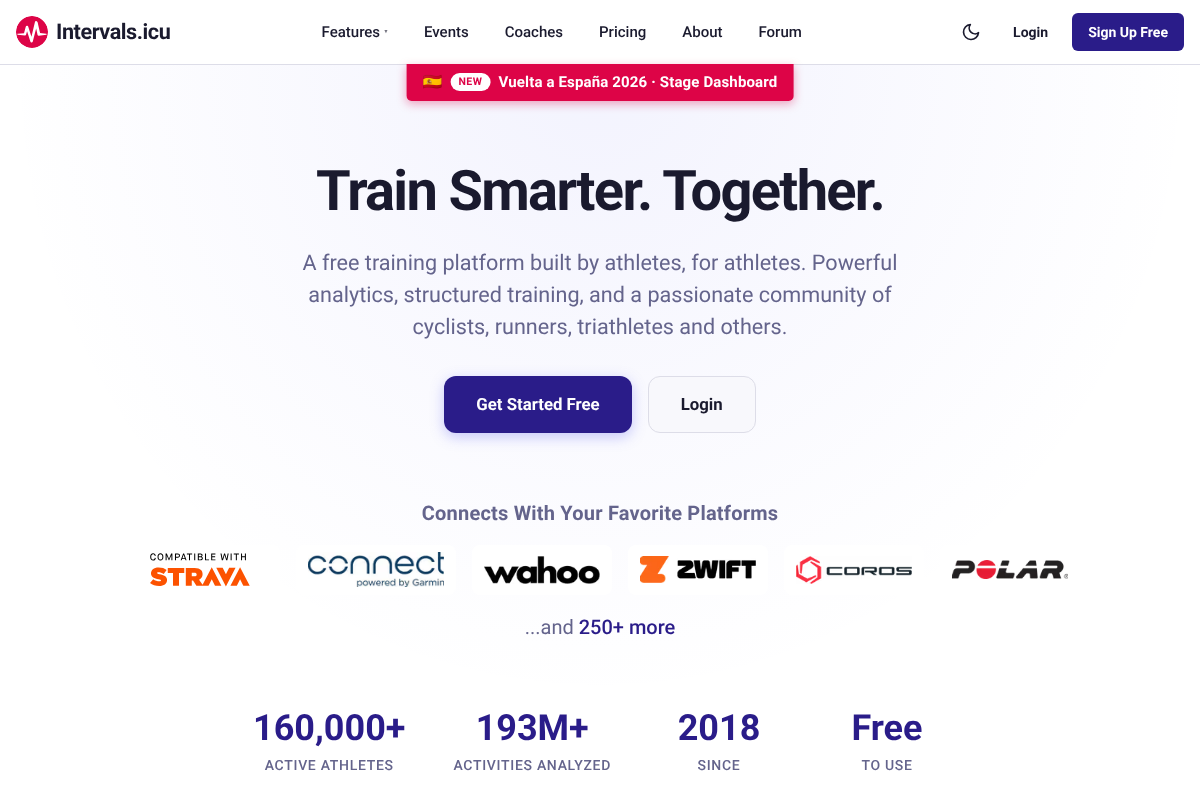
Best for: Runners on any watch brand who want serious analytics without paying for them.
intervals.icu is the app that data-hungry athletes keep recommending to each other, and for good reason. It is a free, web-based training platform built by athletes that pulls activities in from Garmin, Coros, Polar, Wahoo, Zwift, Strava itself, and hundreds of other sources, then turns them into the kind of analysis Strava charges for: fitness and fatigue curves, training load, pace and heart rate trends, and custom charts for nearly anything you can think of.
There is no feed. Nobody kudoses your recovery jog, because nobody sees it. The closest thing to a social layer is a discussion forum where people talk training, which is a very different energy from a leaderboard. The platform has grown past 160,000 active athletes, and its core has stayed free, funded by an optional supporter subscription that unlocks a few extras. The interface leans spreadsheet more than Instagram, which is either a con or the entire appeal, depending on the runner.
- Pros: Free with remarkably deep analysis, syncs from almost any device or platform, no feed at all.
- Cons: Web-first design feels technical, charts can overwhelm a casual logger.
Pricing: Free; optional supporter plan for extra features.
3. Runalyze
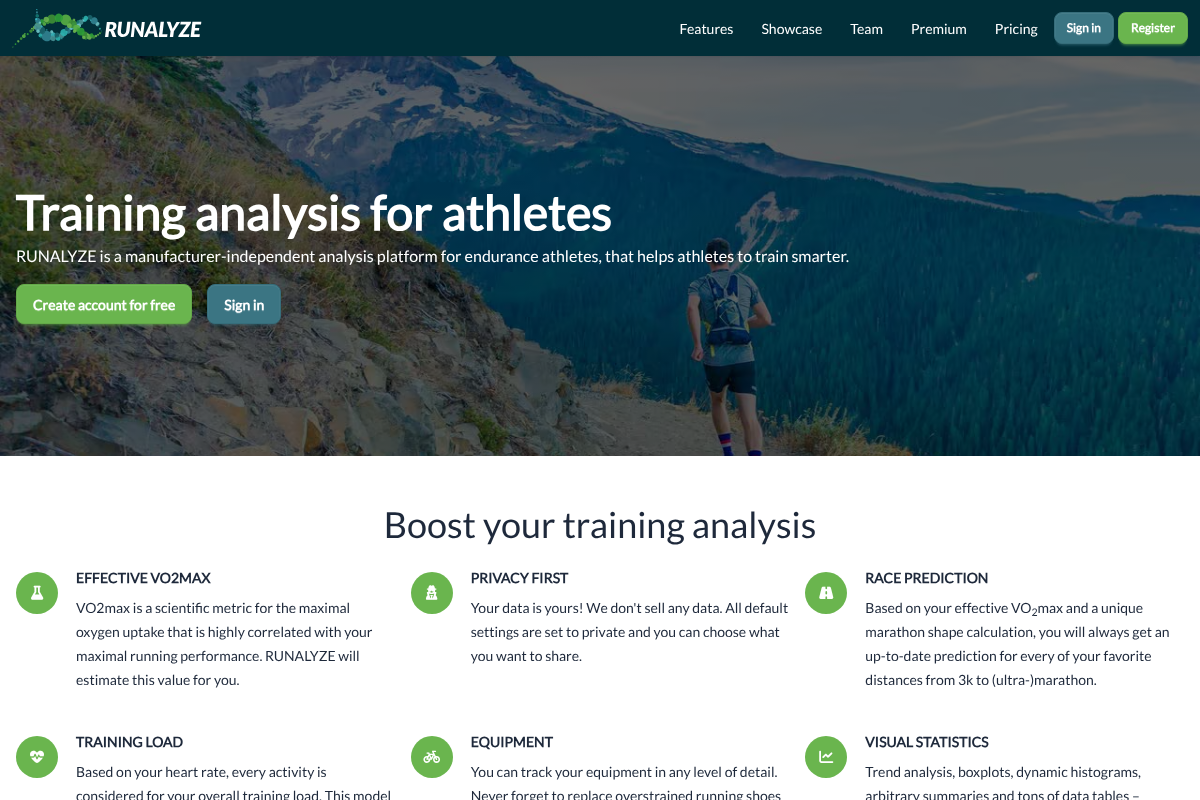
Best for: Runners who want maximum data with privacy as the default, including race predictions.
Runalyze is a manufacturer-independent analysis platform with a stated philosophy that stands out in this category: your data is yours, nothing is sold, and every default setting is private. You choose what, if anything, ever becomes visible. For a runner leaving Strava specifically to stop broadcasting, that posture is the product.
The analysis underneath is genuinely deep. Runalyze estimates your effective VO2 max, models your training load from heart rate, predicts race times for every distance from 3K to ultras, and tracks equipment so you know when a shoe crosses its mileage limit. It started as a hobby project by German runners and has kept that tinkerer’s depth, with boxplots, histograms, and trend tables everywhere. The core platform is free, with inexpensive premium tiers for power users. The trade-off is polish: it looks and feels like a tool built by engineers who run, rather than a lifestyle app.
- Pros: Private by default, race predictions and training load modeling, shoe mileage tracking, free core.
- Cons: Dense interface with a learning curve, mobile experience trails the desktop site.
Pricing: Free core; optional premium tiers.
4. TrainingPeaks
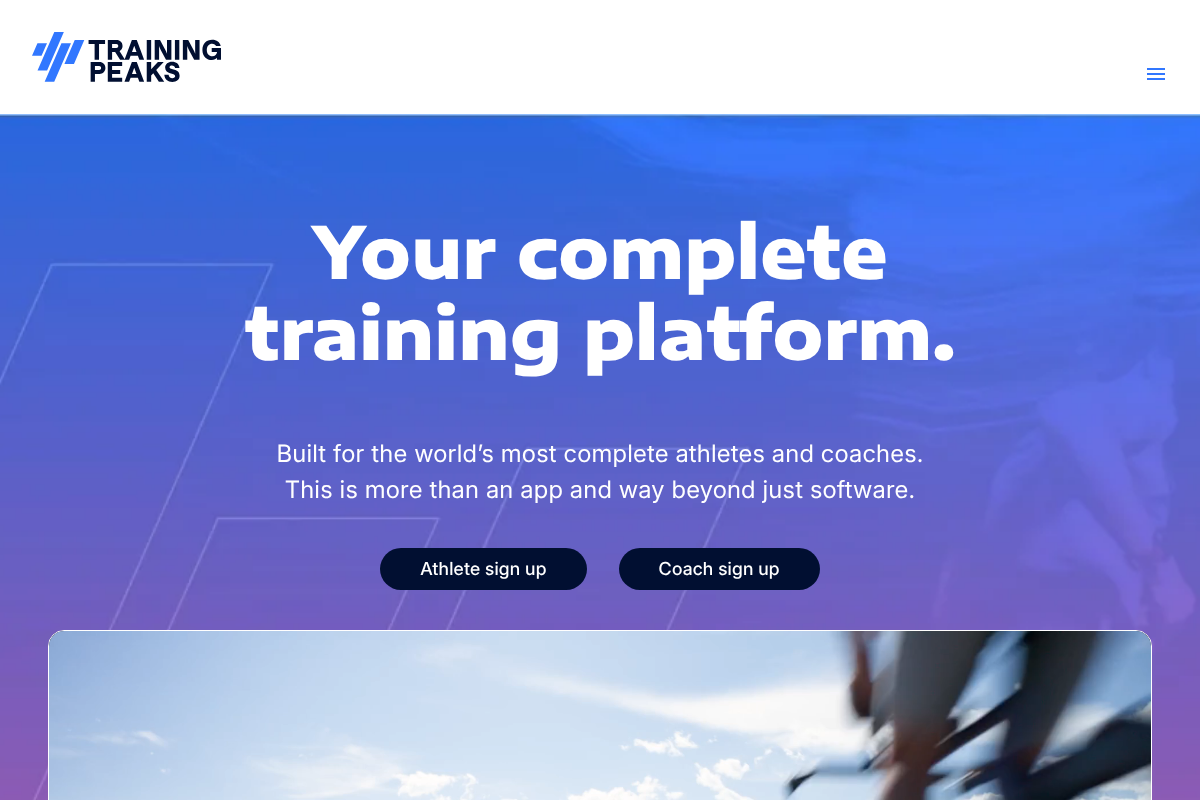
Best for: Runners following a structured plan or working with a coach.
TrainingPeaks approaches running from the opposite direction of a social app. It is a training calendar first: you or your coach plan workouts ahead of time, the app pushes them to your watch, and completed sessions come back scored against the plan. Load metrics show whether you are building fitness or digging a hole, which is the question a serious training block actually turns on.
There is no feed and no kudos, because the entire product is your plan versus your execution. It is the standard platform in the coaching world, so if you ever hire a running coach, odds are good this is where they will meet you. The free tier covers basic logging and receiving a coach’s plan, while the Premium subscription unlocks the planning tools and deeper analysis for self-coached athletes. For a runner who wants a quiet log plus structure, that split works: log free, upgrade only if you become your own coach.
- Pros: Best-in-class structured planning, coach integration, meaningful load tracking, no social layer.
- Cons: Premium subscription needed for the good planning tools, overkill for casual mileage logging.
Pricing: Free tier; paid Premium subscription for full planning features.
5. ASICS Runkeeper
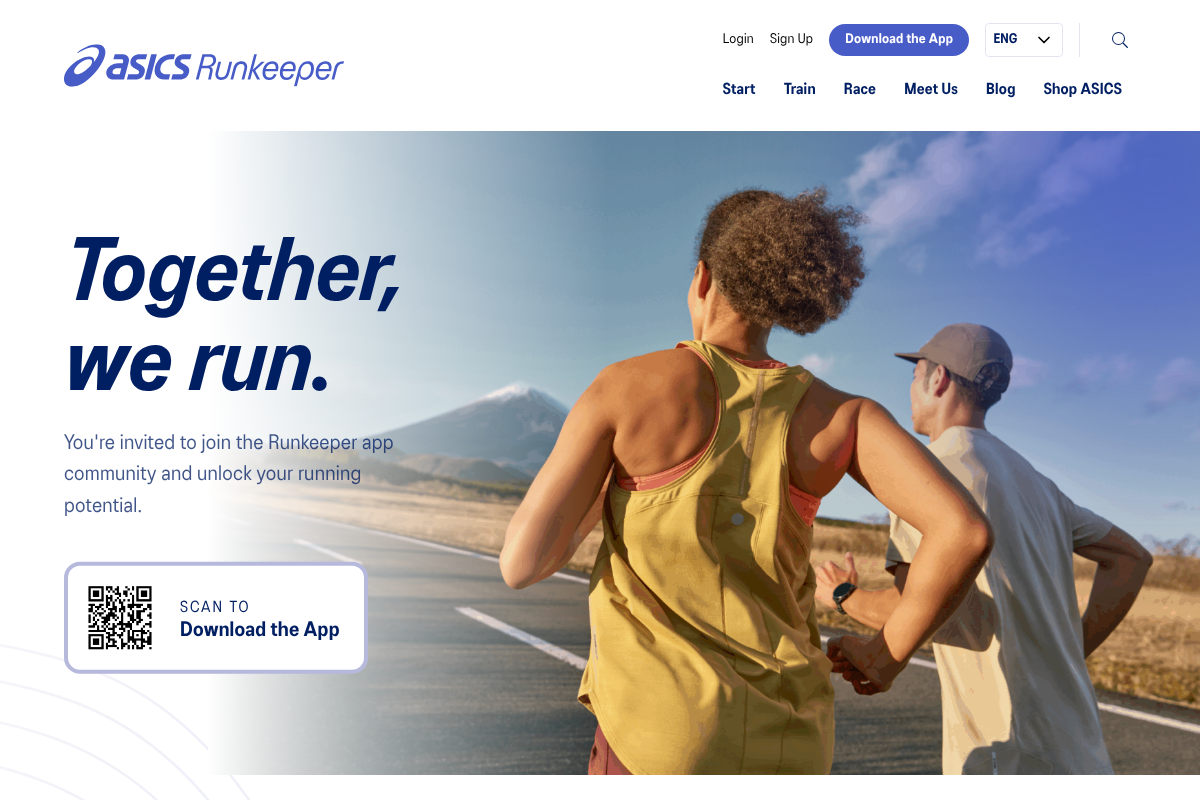
Best for: Runners with no watch who want easy phone tracking and gentle structure.
Runkeeper, now owned by ASICS, is one of the original run-tracking apps, and its personality has stayed the same: track the run, hear your splits through audio cues, follow a simple training plan if you want one, and get on with your day. It runs happily on just a phone, which makes it the natural pick for runners who never bought a GPS watch.
Social features exist, in the form of groups and challenges, but they are opt-in and low-pressure, and there is nothing like a segment leaderboard ranking you against strangers on your home streets. The free tier remains one of the more generous in the category, including guided workouts and basic training plans, while the paid Go tier adds live tracking, weather-aware insights, and more detailed progress stats. It will not model your fatigue curve, and the analytics are shallow next to intervals.icu or Runalyze, but for an uncomplicated private log it does the job with the least friction on this list.
- Pros: Simple phone-only tracking, generous free tier, audio coaching, low-pressure community you can ignore.
- Cons: Light analytics, watch integrations are weaker than logging straight from a device app.
Pricing: Free; Runkeeper Go subscription for premium features.
6. Nike Run Club
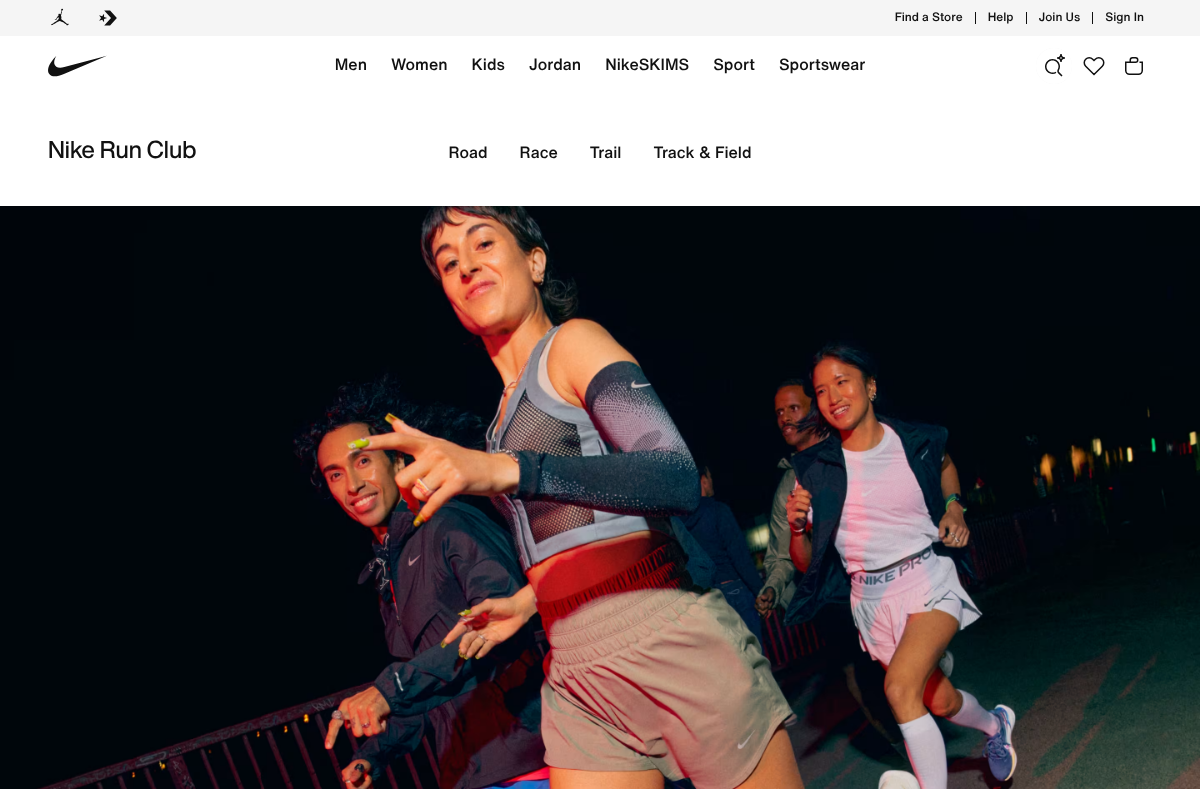
Best for: Runners who want motivation from coaching audio rather than an audience.
Nike Run Club takes the motivation problem that Strava solves socially and solves it differently: with voices in your ears instead of eyes on your feed. Its guided runs, from easy recovery jogs narrated by coaches to structured speed sessions, are the best free audio coaching in running, and its multi-week plans adapt to what you actually do.
Everything in the app is free, with no premium tier at all, which has made it the default landing spot for runners frustrated by features disappearing behind paywalls elsewhere. There is a social side, challenges and friend leaderboards, but it sits in its own tab and never intrudes on the run log itself. The analytics are basic, guided runs and history rather than training load science, so data-focused runners will pair it with something deeper or move on to intervals.icu. As a private, free, encouraging place to log miles, it is hard to argue with.
- Pros: Completely free, excellent guided runs and plans, social features stay out of the way.
- Cons: Shallow analytics, phone-centric with limited watch ecosystem support outside Apple Watch.
Pricing: Free.
How We Chose These
Every app here had to work as a genuine training log for runners: reliable activity tracking, a usable history, and progress you can see over weeks and months. From there we prioritized the actual reason people search for this list, which is escaping the social feed. Apps earned their spot for keeping activities private by default or making social features truly optional, with no segment-style public leaderboards attached to your everyday runs. We weighted free and low-cost options heavily, since paywall creep is the other big reason runners leave Strava, and we favored platforms that import your existing history so switching does not mean starting from zero. Finally, we looked for a spread of styles, from deep-analytics platforms to simple phone trackers, because a quiet log means different things to different runners.
The Bottom Line
If you wear a Garmin, start with Garmin Connect, since it already does the private-log job for free. If you want serious analysis on any device without paying, intervals.icu is the standout, with Runalyze as the pick when privacy-by-default and race predictions matter most. Go with TrainingPeaks if structure or a coach is in your future, Runkeeper if you just want your phone and some encouragement, and Nike Run Club if free guided runs will keep you moving. Whichever you choose, your easy runs stop being content, and that is the whole point. For more training and gear guidance, see our Sports and Tech News sections.
Frequently Asked Questions
What is the best Strava alternative for a private training log?
For Garmin watch owners, Garmin Connect is the best choice, since it offers deep training metrics for free with activities private by default. For runners on any device, intervals.icu is the standout: a free platform with analysis that goes beyond Strava’s paid tier and no social feed at all.
Is intervals.icu really free?
Yes. The core platform, including activity syncing, fitness and fatigue tracking, and detailed charts, is free to use. It is funded by an optional supporter subscription that adds a few extra features, but nothing essential sits behind a paywall, which is a large part of why athletes recommend it so often.
Can I use one of these apps and keep Strava too?
Yes, and many runners do exactly that. Most of these platforms can sync activities alongside Strava, so your runs land in both places automatically. A common setup keeps a free Strava account for friends and clubs while the real training analysis happens privately in intervals.icu, Runalyze, or Garmin Connect.
Will I lose my running history if I leave Strava?
No. Strava lets you export your complete history as an archive, and platforms like intervals.icu and Runalyze can import past activities so your fitness trends carry over. If you connect the apps before canceling anything, new runs sync across, and your old data comes with you rather than starting from zero.
Do these apps have segments or leaderboards?
None of the six puts public segment leaderboards on your everyday runs, which is the feature that creates most of Strava’s social pressure. Runkeeper and Nike Run Club offer optional challenges and groups you can ignore, while intervals.icu, Runalyze, and TrainingPeaks have no feed at all.