


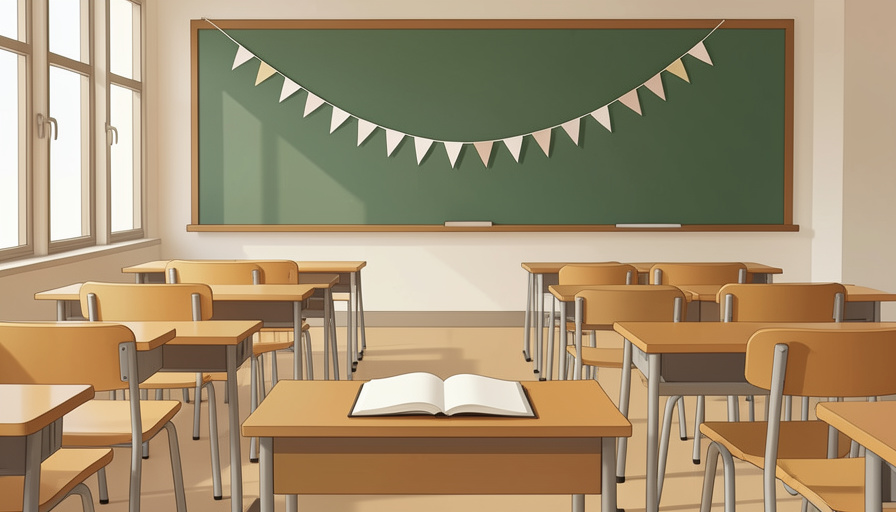
What the latest OECD data actually says, why teachers keep using the word “structural,” and what a long slide in scores means for your kid’s classroom.
On September 8, 2026, the OECD released the PISA 2025 results, and there was no gentle way to phrase the top line. Reading and math scores across the world’s wealthier countries fell to the lowest averages the test has ever recorded. This latest release turned the 2026 PISA results into the clearest sign yet of an international decline that started well before COVID and has kept going since. The pandemic made a convenient explanation for a while. That story is now falling apart.
PISA measures what 15-year-olds can do with reading, math, and science, and it runs every three years. The 2025 round was the biggest yet: about 760,000 students across 91 countries and economies sat the test. So this is not a small sample or a rounding error. It is one of the largest snapshots of teenage learning anyone collects.
The Short Version
Reading scores across the OECD dropped about 28 points since 2015, and math fell roughly 22 points, both record lows for the test. The OECD treats 20 points as close to a full year of schooling, so those are large gaps, not noise. Science held steadier. The reason educators keep saying “structural” is simple: the slide predates the pandemic in many countries, which points at deeper problems in how kids read, focus, and learn.
Table of Contents
What the 2025 PISA Results Actually Showed
The declines are real, and they are not spread evenly across subjects. Reading took the hardest hit. Across OECD countries, average reading performance fell by around 28 points between 2015 and 2025, which the OECD compares to roughly a year and a half of lost learning. Math dropped about 22 points over the same stretch. Both landed at the lowest averages PISA has ever logged, according to the OECD’s own announcement.
Science was the outlier. Average science scores stayed roughly flat between 2022 and 2025, after drifting down over the previous decade. That gap between a stable subject and two falling ones is one of the more useful clues in the whole report, and I will come back to it.
There is also a floor problem. Across the OECD, about one in five 15-year-olds now counts as a low performer in reading, math, and science, up from roughly one in six in 2022. At the same time, the distance between the strongest and weakest students widened to the largest spread PISA has measured. The average fell, but the bottom fell faster than the top.
Why Teachers Are Calling the Slide Structural
Here is the shift that matters most. For a couple of years, the accepted read on falling scores was that school closures broke something temporary, and time plus catch-up funding would fix it. The 2025 data does not support that.
Andreas Schleicher, who runs the OECD’s education work, put it bluntly. “If you’re honest, this decline started much earlier and it continues,” he said. “So the pandemic is not a compelling explanation.” Reading scores were already sliding across many systems before 2020. The closures may have deepened the dip, but they did not start it.
Slight detour, but this is the part people miss. When a decline shows up before the shock, keeps going after the shock ends, and hits countries that closed schools for different lengths of time, you are probably not looking at a one-off event. You are looking at something baked into how kids learn now. That is what “structural” means here, and it is why the mood among teachers is closer to alarm than to patience.
One high school teacher summed up the classroom version of the problem online during release week: plenty of students can read every word on a page and still struggle to say what the passage actually means. Decoding is fine. Comprehension is thinner. That is the exact skill PISA reading tasks lean on, and it is the skill that has fallen the most.
Phones, Attention, and the AI Question
The report spends real energy on how teenagers spend their time, and the picture is not subtle. Students reported spending close to 1.7 hours a day on devices for learning during school, plus roughly another hour on devices for leisure while they were there. Moderate tech use tracked fine. Past about three hours of daily digital time, performance started sliding in country after country.

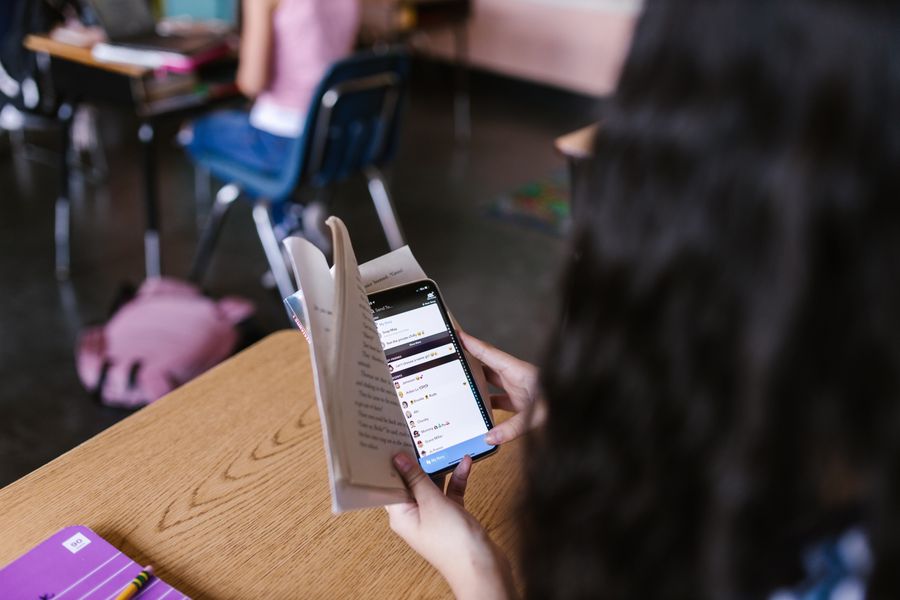
There was also a quieter change in what kids do on those screens. More scrolling and watching, less making and building. The OECD framed it as a move from creating to consuming, and that shift lines up neatly with weaker comprehension and shorter attention.
Schleicher tied this straight to the moment we are in. Scores, he noted, “have declined fastest on reading tasks that are particularly important in this AI age,” where students are “less likely to think deeply and separate signal from noise.” Read that twice. The skills fading fastest are the ones you need most when a chatbot can hand you a confident answer that happens to be wrong.
Teacher groups pushed back hard on the idea that software can patch this. David Edwards, who leads Education International, warned that “the global teacher shortage remains unaddressed” while “AI is being pushed as the magic solution when in fact excessive use results in children outsourcing their learning and their thinking to a bot.” His group’s response to the results kept returning to one point: students need more human teaching, not less. Honestly, given what the science scores suggest, that is hard to argue with.
Where the US and Other Countries Landed
The top of the table looked familiar. China, Singapore, Taiwan, Japan, and South Korea stayed at or near the front, even where their own scores dipped. In Europe, Estonia, Finland, and Ireland held above the OECD average, while several systems, including Spain and Greece, sat below it.
The United States is a more mixed story, and it is worth separating the parts. US reading dropped about 14 points since 2022, which Education Secretary Linda McMahon described as roughly a seven-month loss in learning. Even so, the US still ranked around 13th in reading with an average near 490, above the OECD average. Math was flatter than 2022 but weaker over the long run, leaving the US near 27th. Science was the bright spot: an average around 502 and one of the country’s stronger international showings, per the breakdown of the US numbers.
The catch is the gap. In the US, the distance between the strongest and weakest readers widened by about 50 points since 2015, one of the widest reading spreads anywhere. A decent national average can hide a lot of kids who are quietly falling off the back.
What Parents and Schools Can Do
PISA is a system-level test, so most of the fixes belong to ministries and school boards. But a few findings translate cleanly into things families can act on this term.
- Protect reading for meaning, not reading speed. The skill that fell hardest is understanding and questioning a text, so ask a kid what a passage argued and whether they buy it, rather than whether they finished it.
- Watch the three-hour line. Light device use did not hurt scores in the data. Heavy daily use did. The practical target is capping distracted screen time, especially during school hours, rather than banning screens outright.
- Treat AI answers as drafts. If comprehension is the weak point, letting a chatbot do the thinking makes it weaker. Use it to check work, not to skip the work.
- Ask your school about phone policy. Systems with clearer classroom phone rules reported fewer distractions. It is a fair question at the next parent meeting.
None of that reverses a decade-long trend by Friday. It does line up with what the strongest systems and the calmest experts keep saying, which is that steady teaching and steady attention still do the heavy lifting.
This article is for general information only and reflects the OECD’s reported findings from the 2025 PISA release. It is not personalized educational advice for a specific child, school, or district.
What To Know
- PISA 2025 tested about 760,000 students in 91 countries and economies, the largest round to date.
- OECD reading fell roughly 28 points and math about 22 points from 2015, both record lows for the test.
- Science held roughly steady since 2022, which sharpens the case that reading and attention are the core problem.
- The decline predates the pandemic in many countries, which is why educators call it structural rather than a COVID dip.
- Heavy daily screen time and thinner reading comprehension keep showing up as the through-lines.
Frequently Asked Questions
What is PISA and who takes it?
PISA is the OECD’s Programme for International Student Assessment. It tests 15-year-olds in reading, math, and science every three years and is used to compare how school systems perform across countries. The 2025 round involved about 760,000 students across 91 countries and economies.
Did the pandemic cause the PISA decline?
Not on its own. The OECD’s education director, Andreas Schleicher, said the decline started well before 2020 and has continued since, so the pandemic “is not a compelling explanation.” School closures likely made things worse, but the downward trend was already in place.
Which countries scored highest in PISA 2025?
China, Singapore, Taiwan, Japan, and South Korea remained at or near the top. In Europe, Estonia, Finland, and Ireland stayed above the OECD average, while systems such as Spain and Greece scored below it.
How did the United States do?
US reading fell about 14 points since 2022 but still ranked around 13th, with an average near 490. Math was flatter and ranked near 27th. Science was the strongest subject, at roughly 502. The bigger concern is a widening gap between top and bottom readers.
Do phones and screen time really lower test scores?
The data points that way. Light-to-moderate device use tracked fine, but performance tended to fall once daily digital time passed about three hours. The OECD also flagged a shift from creating on devices to passively consuming, which lines up with weaker comprehension.
What This Means
The 2025 PISA results close the door on the comforting version of this story, where scores dipped for one bad reason and would bounce back on their own. Reading and attention have been eroding for a decade, the pandemic accelerated it, and the tools now marketed as the cure can quietly deepen it. The systems that seem to hold steady are not doing anything exotic. They keep good teachers in front of kids and keep distraction out of the room. If the next PISA release in the late 2020s looks any different, that ordinary combination is where the change will start. For more on schools and learning, browse ShoutPost’s Education section, and families weighing screen-time rules may find the Family & Personal section useful.