


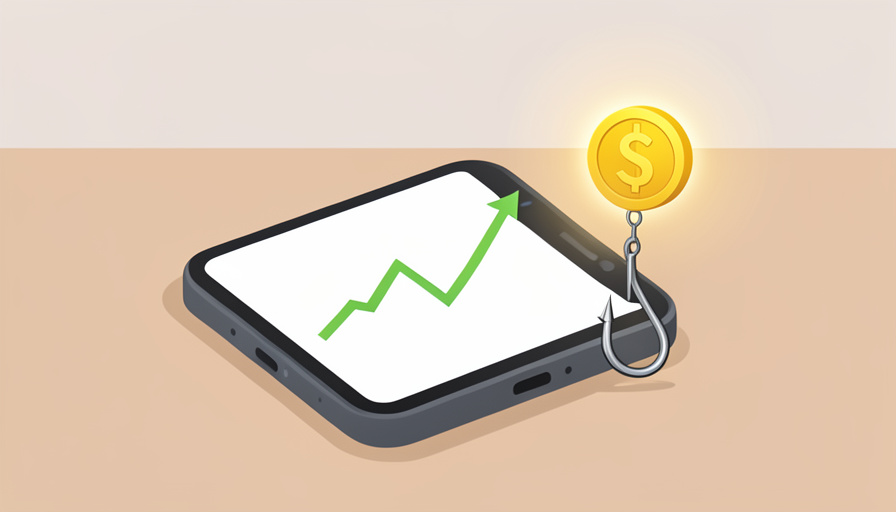
A stranger texts you out of nowhere with a cheerful job offer: work from home, flexible hours, just complete a few simple online tasks and watch your balance grow. It sounds too easy. It is. This is one of the fastest-growing scams around, and the trap is cleverer than it looks.
Task scams, sometimes called gamified job scams, have exploded because they do not feel like a scam at first. You seem to be earning, the numbers go up, and by the time anyone asks you for money, you are already invested. Knowing how a task scam works, and the handful of red flags that give it away every time, is the difference between a weird text you ignore and a bank account you drain. Here is the whole playbook.
Quick Answer
A task scam starts with an unsolicited message offering easy online work, like liking videos or rating products. You complete tasks and watch fake earnings climb, then the app asks you to deposit your own money, usually in crypto, to unlock or withdraw those earnings. The earnings are not real, and the deposit is gone. The single clearest sign: any job that asks you to pay to get paid is a scam.
How a Task Scam Works
The scam runs on a script, and it is worth seeing the whole arc so you recognize where it is heading.
It starts with an unexpected text, WhatsApp message, or DM from a “recruiter” praising a flexible online job. The work sounds trivial: do “app optimization,” “boost products,” or like and rate videos and images. You are added to a platform or app and given a set of tasks to click through. As the FTC describes the pattern, a tally of “earnings” starts climbing as you work, which is the hook. Early on you might even be allowed to withdraw a tiny amount, which cements your trust.
Then the turn comes. To unlock more tasks, hit a “bonus,” or withdraw your growing balance, the app says you must first deposit your own money, typically in cryptocurrency. Some victims deposit once, see the balance jump, and are encouraged to deposit more. Every dollar you put in is real and gone. Every dollar you “earned” was a number on a screen the scammers controlled.
The Warning Signs
Task scams vary in the details, but they share a small set of tells. If you see these, stop.
- You have to pay to get paid. This is the big one. No legitimate job asks you to deposit money to release your wages. Ever.
- The job arrived unsolicited. A random text or message offering work you never applied for is a classic opener.
- The “work” is liking or rating things. Paying people to like or rate content is against platform rules and is not real employment.
- It feels like a game. Points, streaks, levels, and a rising balance are designed to keep you engaged, not to pay you.
- Crypto is involved. Being asked to deposit or withdraw through cryptocurrency is a heavy red flag for this scam.
- Pressure and secrecy. Urgency to deposit before a “bonus” expires, or being told not to discuss it, both point to a scam.
Why This Scam Is Exploding
The numbers are stark. The FTC reports that losses to job scams more than tripled between 2020 and 2023, and that gamified task scams drove record losses, with reports jumping from around 5,000 in all of 2023 to roughly 20,000 in just the first half of 2024.
The reason it works on smart people is the design. The scam front-loads a sense of progress and success before it ever asks for anything, so by the time money enters the picture, you feel like you are protecting earnings you already made rather than gambling on a stranger. That reframing is the whole trick. The “job” is engineered to feel like a job right up until the moment it robs you.
What to Do If You Are Targeted
If a message like this lands and you have not paid anything, you are in good shape. Handle it cleanly:
- Do not deposit any money. That is the entire scam. If you never pay, you never lose real money.
- Stop responding and block. Do not argue or explain. Cut contact and block the number or account.
- Do not share personal or banking details. Even without a deposit, the information you hand over has value to them.
- Report it. File with the FTC and, in the US, the FBI’s IC3, and report the message to your messaging platform.
- Warn people. These messages hit friends and family in waves, so a heads-up helps.
What to Do If You Already Paid
If you have already sent money, act fast, because speed matters most in the first hours and days.
Contact your bank or the payment service immediately and ask about reversing or freezing the transaction. If you paid through a crypto exchange, contact that exchange’s support and report the wallet. Change the passwords on any account you touched during the scheme, gather screenshots and records of every message and transaction, and file a report with the FTC and IC3. Recovery is not guaranteed, but reporting quickly gives you the best odds and helps investigators track the operation. One more warning: be wary of anyone who contacts you afterward promising to recover your funds for a fee, because that is a common follow-up scam aimed at the same victims.
Key Takeaways
- Task scams offer easy online work, show fake rising earnings, then demand a deposit to withdraw them.
- The clearest red flag is being asked to pay money in order to get paid, which no real job requires.
- Unsolicited offers, like-or-rate “work,” game-like mechanics, and crypto deposits are all warning signs.
- If targeted, do not deposit, block the sender, protect your details, and report it to the FTC and IC3.
- If you already paid, contact your bank or exchange immediately, document everything, and beware recovery scams.
Frequently Asked Questions
What is a task scam?
A task scam is a fake online job that has you complete simple tasks, like liking videos or rating products, while showing you fake earnings. To withdraw those earnings, the app eventually asks you to deposit your own money, usually crypto. The earnings are not real and the deposit is stolen.
How do I know if a job offer is a task scam?
The biggest sign is being asked to pay to receive your earnings, which legitimate employers never do. Other tells include an unsolicited message, work that involves liking or rating content, game-like points and balances, pressure to deposit quickly, and any request to pay or withdraw through cryptocurrency.
Can I get my money back after a task scam?
Sometimes, if you act quickly. Contact your bank or payment provider right away to try to reverse or freeze the transaction, and report crypto payments to the exchange. Recovery is not guaranteed, so report to the FTC and IC3 promptly, and avoid anyone who offers to recover your funds for a fee.
Why do people fall for task scams?
Because the scam feels like real work before it asks for anything. You see a balance climb and may withdraw a small amount early, which builds trust. By the time a deposit is requested, you feel like you are protecting money you earned rather than risking money on a stranger.
The Bottom Line
Task scams win by looking like opportunity instead of theft, dressing up a con as a flexible side gig with a satisfying rising balance. Strip away the game and one rule cuts through all of it: a real job pays you, it never asks you to pay first. If a message offers easy money for liking things online and later wants a deposit to release your earnings, you are not looking at a job. Walk away, block the sender, and report it. For more coverage, see ShoutPost’s Finance & Money and Business sections.
This article is general consumer-safety information, not financial or legal advice. If you have lost money, contact your bank and report the scam to the FTC at reportfraud.ftc.gov and, in the US, the FBI’s IC3.