



Five email platforms that get a small list into the inbox, handle the new sender rules for you, and cost less than Mailchimp.
When email campaigns start landing in the Promotions tab or the spam folder, the instinct is to blame the subject line. Often the real issue is deliverability: how well your platform authenticates your mail and protects the reputation of the servers it sends from. Mailchimp works, but for a small list it can feel expensive, and inbox mailbox providers have tightened their rules on who gets through. If your open rates have quietly slipped, a platform built around clean sending can help. Here are five Mailchimp alternatives worth a look, sorted by the kind of sender each one fits.
The best Mailchimp alternatives for deliverability in 2026 are:
- Brevo: best for deliverability plus SMS and multichannel
- Kit: best for creators and newsletters
- Flodesk: best for design with flat-rate pricing
- Constant Contact: best for small businesses wanting support
- beehiiv: best for growing and monetizing a newsletter
Quick Picks
| Platform | Best For | Free Tier | Deliverability Angle |
|---|---|---|---|
| Brevo | Multichannel plus email | Yes, daily send limit | Strong sending infrastructure, easy authentication |
| Kit | Creators and newsletters | Yes, to a subscriber cap | Focus on personal, relationship-based sending |
| Flodesk | Design-forward small brands | Trial only | Markets inbox placement as a core feature |
| Constant Contact | Hands-on small business | Trial only | Guided setup and deliverability tools |
| beehiiv | Newsletter growth | Yes, to a subscriber cap | Built for large-scale newsletter sending |
Table of Contents
1. Brevo

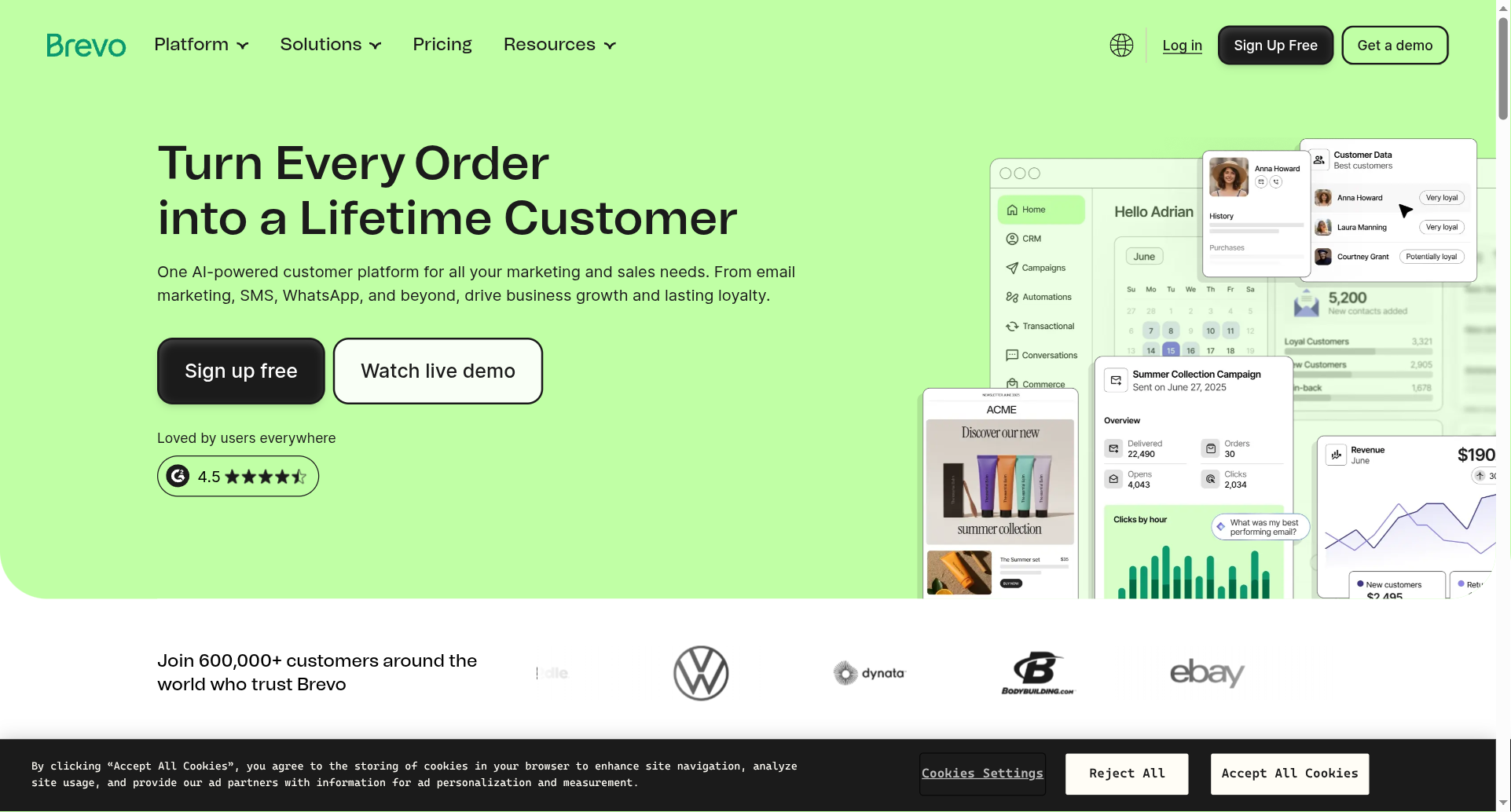
Best for: Small businesses that want strong email delivery plus SMS and other channels in one tool.
Brevo, formerly Sendinblue, pairs solid email deliverability with a wider toolkit: SMS, WhatsApp, a light CRM, and automation. Its sending infrastructure has a good reputation, and it walks you through the authentication steps that mailbox providers now expect, so your mail is more likely to land in the inbox. The pricing model helps a small list too, because it charges by emails sent rather than by contacts stored, which suits people with a big list they email occasionally.
The free plan has a daily send limit, and the interface can feel busy because it does so much. For a small business that wants one place to reach people by email and text with dependable delivery, though, Brevo is a strong and affordable anchor.
- Pros: Reliable sending reputation; charges by emails sent, not contacts; SMS and multichannel built in; free tier to start.
- Cons: Daily send cap on the free plan; the all-in-one interface has a learning curve; advanced features need a higher tier.
Pricing: Free with a daily send limit. Paid plans start around $9/mo and scale with monthly email volume.
2. Kit
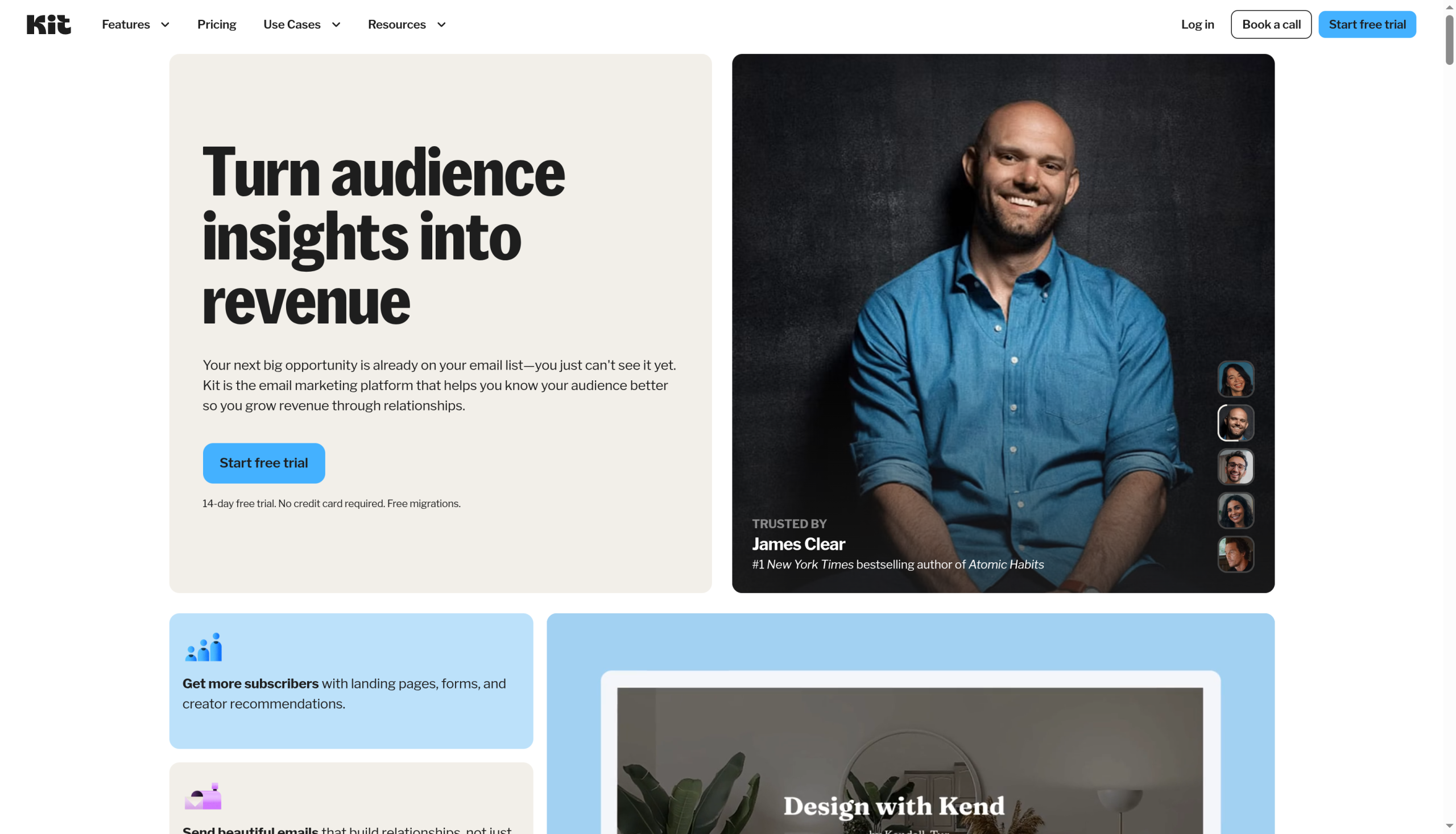
Best for: Creators, writers, and anyone running a personal newsletter.
Kit, the platform formerly called ConvertKit, is built for creators who send personal, text-forward emails, and that style tends to land in the inbox because it looks like real mail rather than a heavy promotional blast. It handles automation, landing pages, and subscriber tagging well, and its whole design nudges you toward the relationship-based sending that mailbox providers reward. For a newsletter or a creator business, it fits the way you actually write.
It is less suited to image-heavy retail campaigns, and pricing scales by subscriber count, so a large free list can get expensive as you grow. If your emails are mostly you talking to your audience, Kit is a natural home with a generous starting tier.
- Pros: Built for creators and newsletters; clean, text-forward emails that deliver well; strong automation and tagging; free tier to a subscriber cap.
- Cons: Less ideal for heavy retail design; pricing rises with subscriber count; fewer templates than some rivals.
Pricing: Free up to a subscriber limit. Paid Creator plans start around $15/mo and scale with subscribers.
3. Flodesk
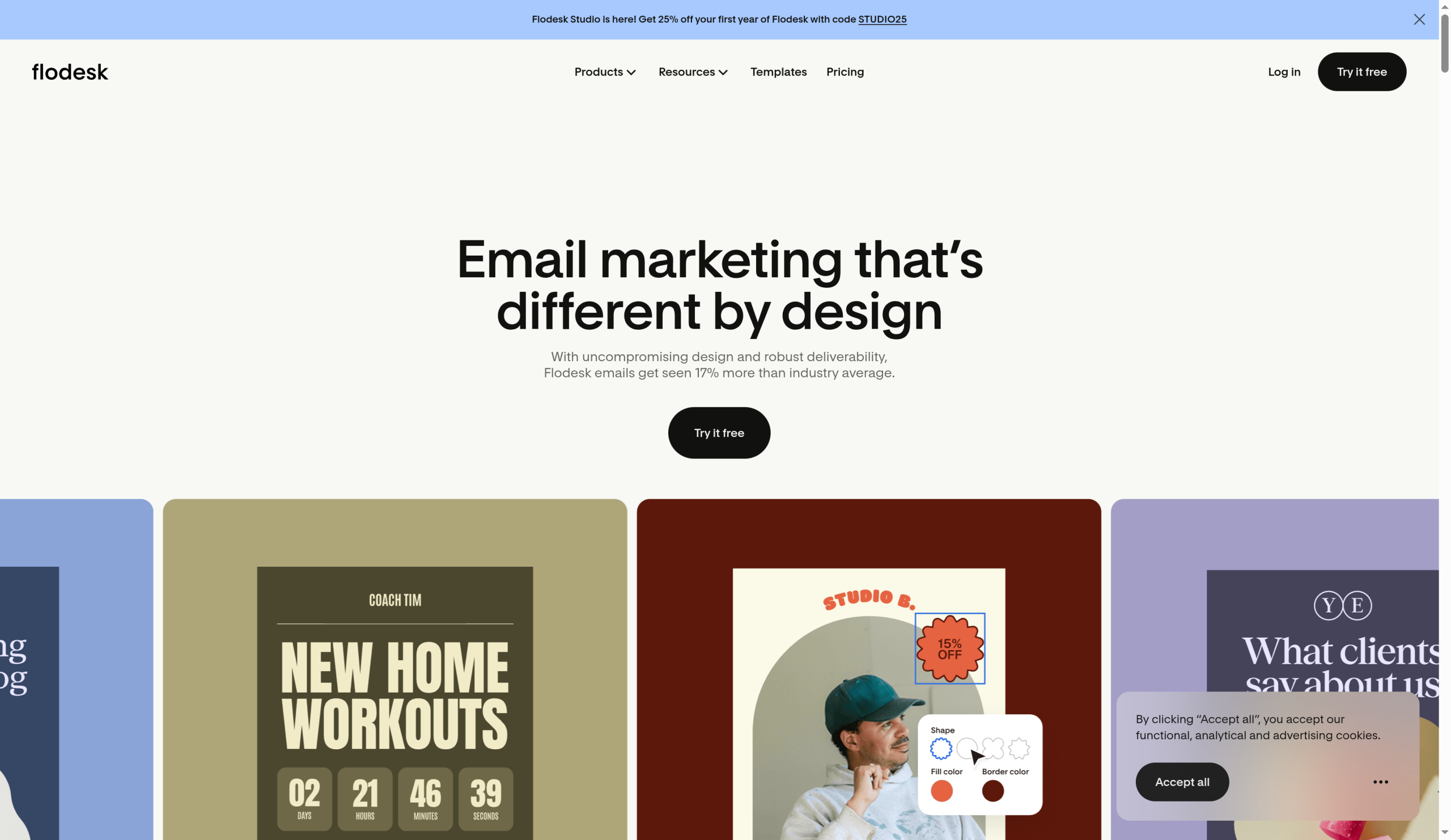
Best for: Small brands that want beautiful emails and predictable, flat pricing.
Flodesk stands out on two things small senders care about: design and price. Its templates are genuinely attractive out of the box, and it charges a flat monthly rate no matter how large your list grows, which is a relief if you are tired of watching the bill climb with every new subscriber. It also leans on its delivery record as a selling point, positioning inbox placement as a core feature rather than an afterthought.
It is lighter on advanced automation and reporting than the bigger platforms, so a data-heavy operation may find it thin. For a solo business, a shop, or a creator who wants polished emails at one steady price, Flodesk is a comfortable fit.
- Pros: Beautiful templates by default; flat pricing regardless of list size; markets strong inbox placement; simple to learn.
- Cons: Lighter automation and analytics; fewer integrations; no permanent free plan.
Pricing: Flat monthly rate for unlimited subscribers and emails, with a free trial and a discounted annual option.
4. Constant Contact
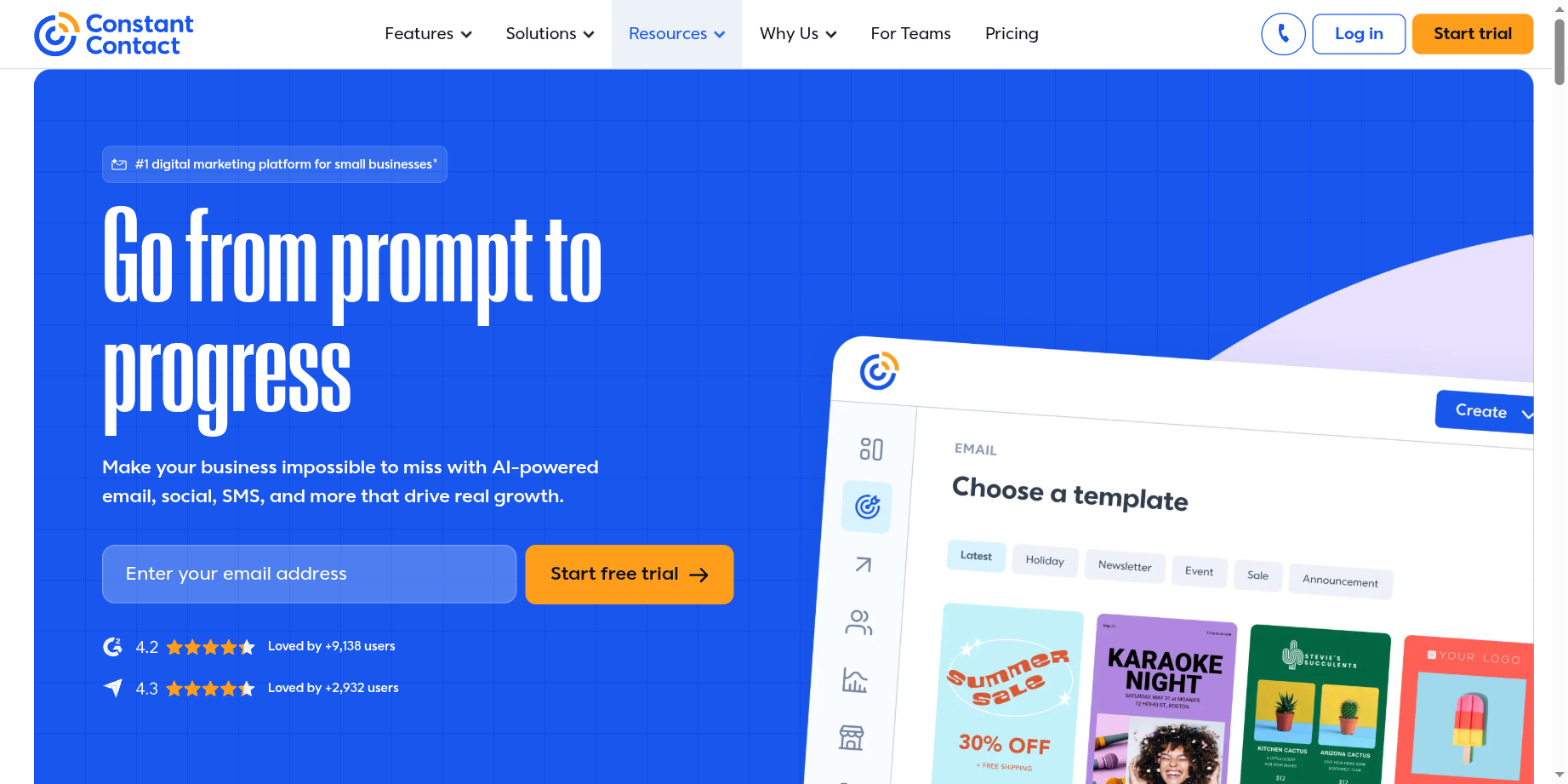
Best for: Small businesses that want guidance and real customer support.
Constant Contact is one of the older names in email marketing, and its strength is hand-holding. It offers guided setup, a large template library, event and social tools, and phone support, which matters to a small business owner who does not want to become an email expert. It also provides deliverability tools and helps you get authentication in place, so your campaigns clear the new sender requirements without a lot of technical work.
It tends to cost more than the lean newcomers, and it charges by contact count, so a big list adds up. For an owner who values support and an all-in-one dashboard over the lowest price, the trade is often worth it.
- Pros: Strong customer support and guidance; large template and tool set; deliverability help built in; established sender reputation.
- Cons: Pricier than newer tools; charges by contact count; no permanent free plan.
Pricing: No free plan. Paid plans start around $12/mo and scale with your number of contacts.
5. beehiiv
Best for: Newsletters focused on growing an audience and earning from it.
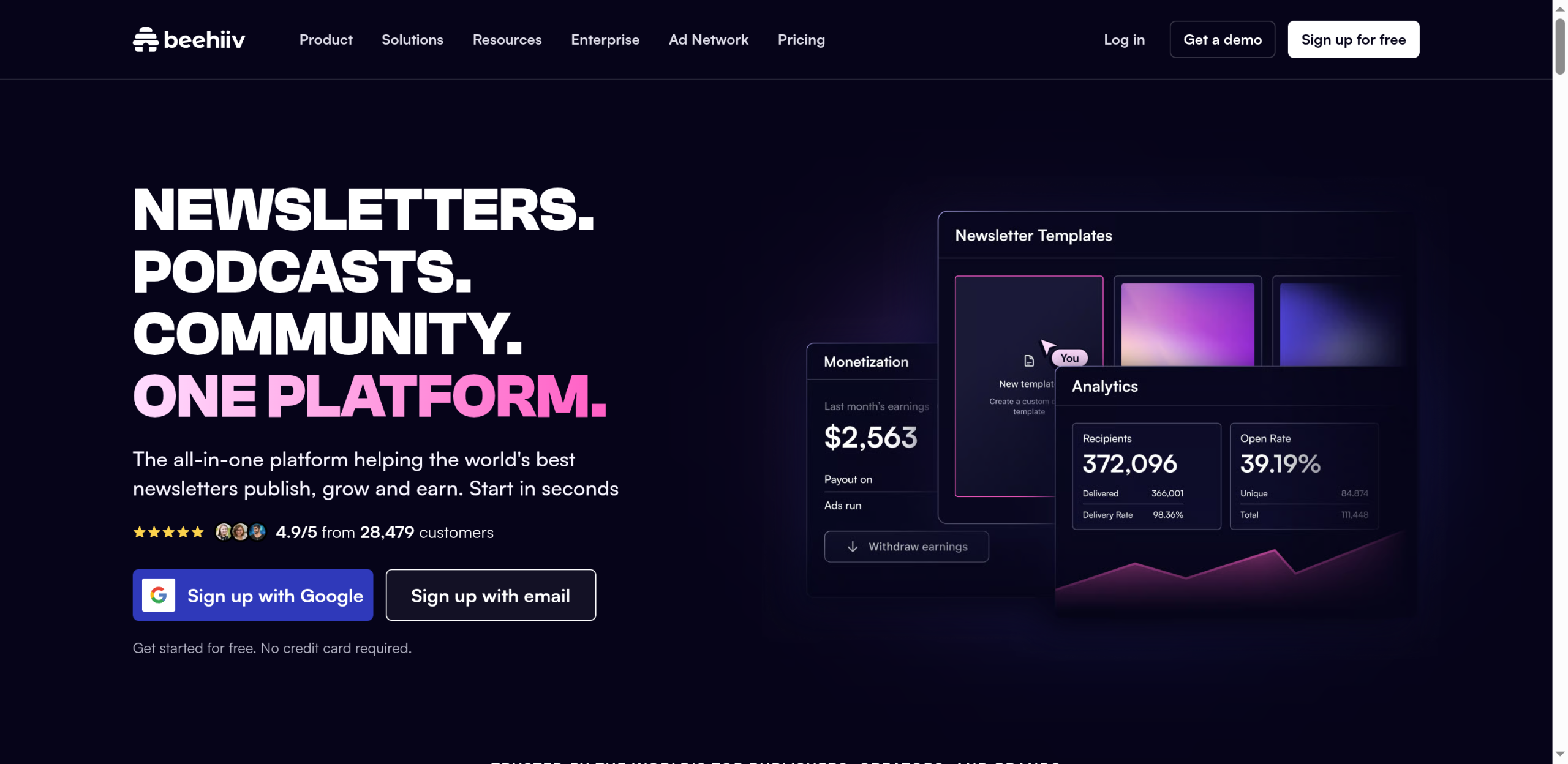
beehiiv was built by people who ran a large newsletter, and it shows in its focus on growth and monetization: referral programs, recommendations, a built-in ad network, and analytics tuned to newsletter sending. Because it is designed for high-volume newsletter delivery, its infrastructure is geared toward getting mail to the inbox at scale. For anyone treating a newsletter as a business, the growth tooling is the draw.
It is purpose-built for newsletters, so it is less of a fit for a retail store sending sale emails or a service business doing transactional mail. If your goal is to grow subscribers and turn them into revenue, though, beehiiv is aimed squarely at you, and it starts free.
- Pros: Growth and monetization tools baked in; strong newsletter deliverability at scale; newsletter-focused analytics; free tier to a subscriber cap.
- Cons: Built for newsletters, not retail or transactional email; fewer classic marketing-automation features; pricing scales with subscribers.
Pricing: Free up to a subscriber limit. Paid plans scale with subscribers and unlock growth features.
How We Chose These
We picked for the sender with a small or growing list who cares whether the email actually arrives. The priorities were inbox placement and a platform that handles sender authentication for you, a fair price that does not punish a small list, and a fit for how you send, whether that is a personal newsletter, a designed retail campaign, or multichannel outreach. Deliverability now hinges partly on meeting mailbox-provider rules: as Google’s email sender guidelines spell out, senders are expected to authenticate their mail with SPF, DKIM, and DMARC, offer one-click unsubscribe, and keep spam complaints low, and the sender guidelines FAQ covers the details. We favored platforms that make meeting those rules easy.
The Bottom Line
If you want dependable delivery plus SMS in one tool, start with Brevo. Creators and newsletter writers will feel at home in Kit, while beehiiv is the pick if growing and monetizing a newsletter is the goal. For beautiful emails at a flat price, choose Flodesk, and for guided setup with real support, Constant Contact earns its keep. Whichever you choose, set up SPF, DKIM, and DMARC, use one-click unsubscribe, and keep your list clean, because the best platform cannot save mail that recipients mark as spam.
Frequently Asked Questions
What is the best Mailchimp alternative for deliverability?
For most small senders, Brevo is a strong choice because it has a solid sending reputation and makes authentication easy, and it bundles SMS with email. Creators often get better inbox placement with Kit’s text-forward style, and beehiiv is built for high-volume newsletter delivery. The best pick depends on how you send, but any of them can outperform a poorly configured account.
Why are my emails going to spam or the Promotions tab?
Common causes are missing sender authentication, a high spam-complaint rate, image-heavy or salesy formatting, and sending to unengaged contacts. Mailbox providers now expect SPF, DKIM, and DMARC, plus one-click unsubscribe on marketing mail. Switching to a platform that sets these up for you and keeps its sending servers clean can help, but list hygiene and content matter too.
Is there a free Mailchimp alternative?
Yes. Brevo has a free plan with a daily send limit, and Kit and beehiiv offer free tiers up to a subscriber cap. These are genuine free plans suitable for a small list, though advanced features and higher volumes require paid tiers. Flodesk and Constant Contact rely on trials rather than a permanent free plan.
Do these platforms handle the new email sender rules for me?
Largely, yes. Reputable platforms guide you through setting up SPF, DKIM, and DMARC for your domain and include one-click unsubscribe on marketing emails, which are the core requirements from Gmail and Yahoo. You still have to complete the domain authentication steps and keep complaints low, but the platform does the heavy lifting and flags what is missing.
What To Do Next
Shortlist the one that matches how you send, then before your first campaign, authenticate your sending domain with SPF, DKIM, and DMARC in the platform’s setup, and turn on one-click unsubscribe. Clean out inactive subscribers, send a small test, and check where it lands across Gmail, Outlook, and Yahoo. For more tools and small-business guidance, see our Business and Tech News sections.