



GA4 is free, but the cookie banner, the setup, and the privacy questions are the price. A cookieless analytics tool gives you the numbers you actually check, without the consent headache.
Plenty of site owners moved to GA4 and found it harder to read, heavier on cookie-consent requirements, and uncomfortable on privacy. The alternatives below take a different approach: lightweight, privacy-first analytics that skip cookies, so in most cases you avoid the consent banner entirely, and the dashboard shows the handful of numbers you actually use. They range from a simple paid tool to a free open-source platform you can host yourself, and each one works with WordPress and other sites through a small script or plugin.
Quick Answer
The best privacy-first Google Analytics alternatives are:
- Plausible: best all-around privacy-friendly analytics
- Fathom Analytics: best for simple, no-fuss tracking
- Matomo: best full-featured, self-hostable GA replacement
- Simple Analytics: best for seeing traffic when visitors deny consent
- Umami: best free and open-source option
Quick Picks
| Tool | Best for | Cookieless | Pricing |
|---|---|---|---|
| Plausible | All-around privacy analytics | Yes | From $9/mo, self-host free |
| Fathom Analytics | Simple, no-fuss tracking | Yes | From $15/mo |
| Matomo | Full-featured, self-hosting | With configuration | Cloud from ~€23/mo; on-premise free |
| Simple Analytics | Consent-denied traffic | Yes | Limited free tier; paid plans |
| Umami | Free and open-source | Yes | Self-host free; cloud free tier |
1. Plausible

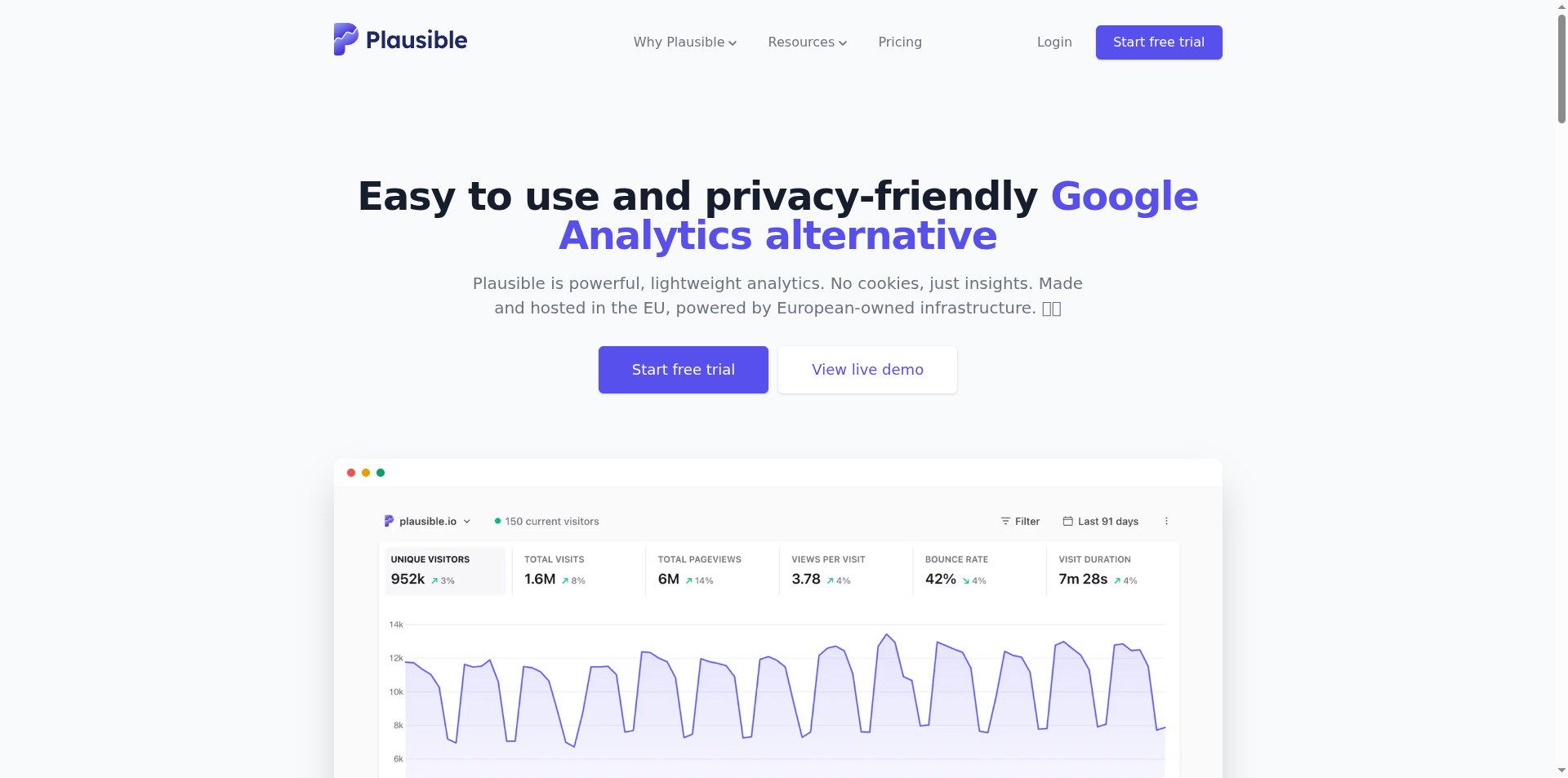
Best for: most site owners who want privacy-friendly analytics that stay simple.
Plausible is the tool most people land on when they leave GA4. It is open-source, cookieless, and made and hosted in the EU, with a lightweight script that will not slow your pages. The single-page dashboard shows visitors, top pages, sources, and goals, without the maze of GA4 menus. Because it sets no cookies and stores no personal data, most sites can run it without a consent banner. Paid plans start around $9 a month for a small site, and you can self-host the open-source version for free if you run your own server.
- Pros: cookieless with no banner in most cases, open-source, EU-hosted, and a clean single-page dashboard.
- Cons: no free hosted tier beyond a trial, and it is lighter on deep drill-downs than GA4.
Pricing: from about $9 a month; self-hosting is free.
2. Fathom Analytics
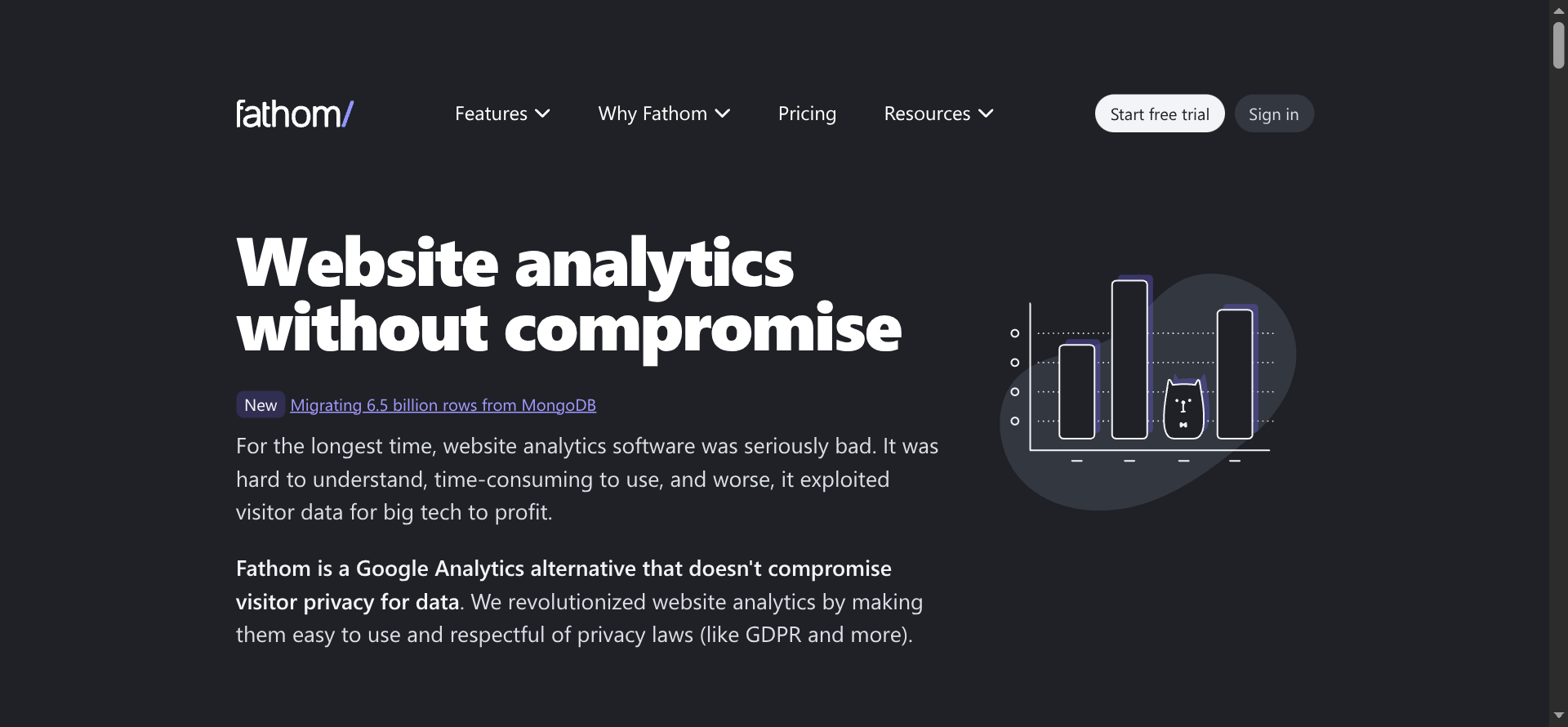
Best for: people who want privacy-first analytics with zero fuss.
Fathom Analytics is a polished, cookieless GA alternative built around simplicity and GDPR compliance. Like Plausible, it avoids cookies and personal data, so you generally skip the consent banner, and its dashboard is quick to read at a glance. It leans fully hosted, with no free tier, starting around $15 a month, and it offers EU data isolation for stricter privacy needs. If you want a set-and-forget privacy tool and do not mind paying for it, Fathom is a strong choice.
- Pros: cookieless and GDPR-friendly, a clean fast dashboard, an EU isolation option, and easy setup.
- Cons: no free plan, and pricing is a step above Plausible at the entry tier.
Pricing: from about $15 a month, with no free tier.
3. Matomo
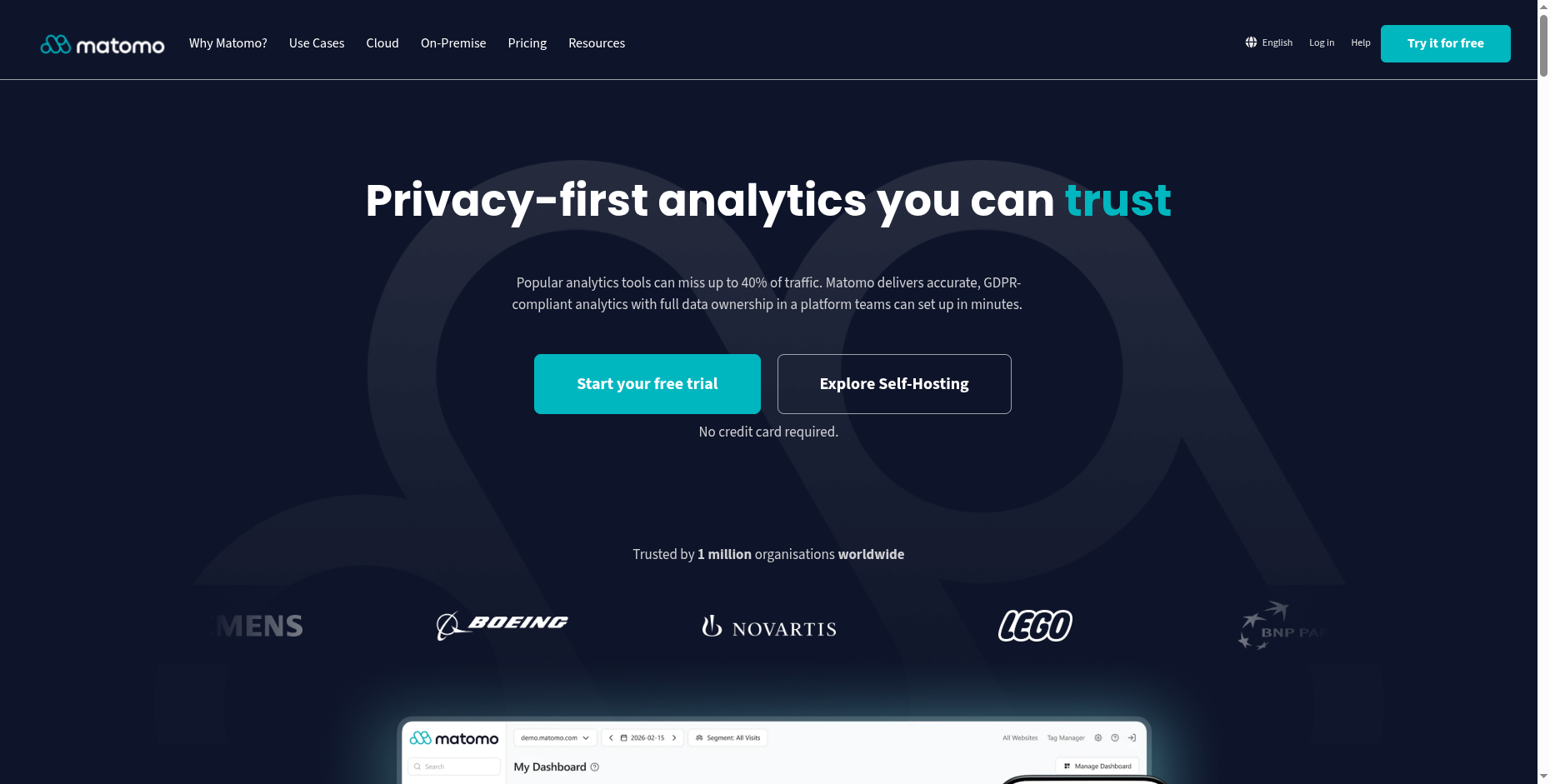
Best for: people who want GA-level depth and full control of their data.
Matomo is the closest thing to a full Google Analytics replacement, with the deep reports, segments, and features power users miss elsewhere. Its big draw is ownership: the On-Premise version is free to self-host, so your data never leaves your server, and Matomo Cloud is a paid hosted option if you would rather not run it yourself. It can operate cookie-free with the right configuration to avoid a banner, though it needs a bit more setup than the simpler tools. For teams that want depth and data ownership, it stands alone here.
- Pros: full-featured with deep reports, free self-hosting, full data ownership, and a can-be-cookieless setup.
- Cons: heavier to run and configure, and Cloud pricing climbs with traffic.
Pricing: On-Premise is free to self-host; Matomo Cloud starts around 23 euros a month.
4. Simple Analytics
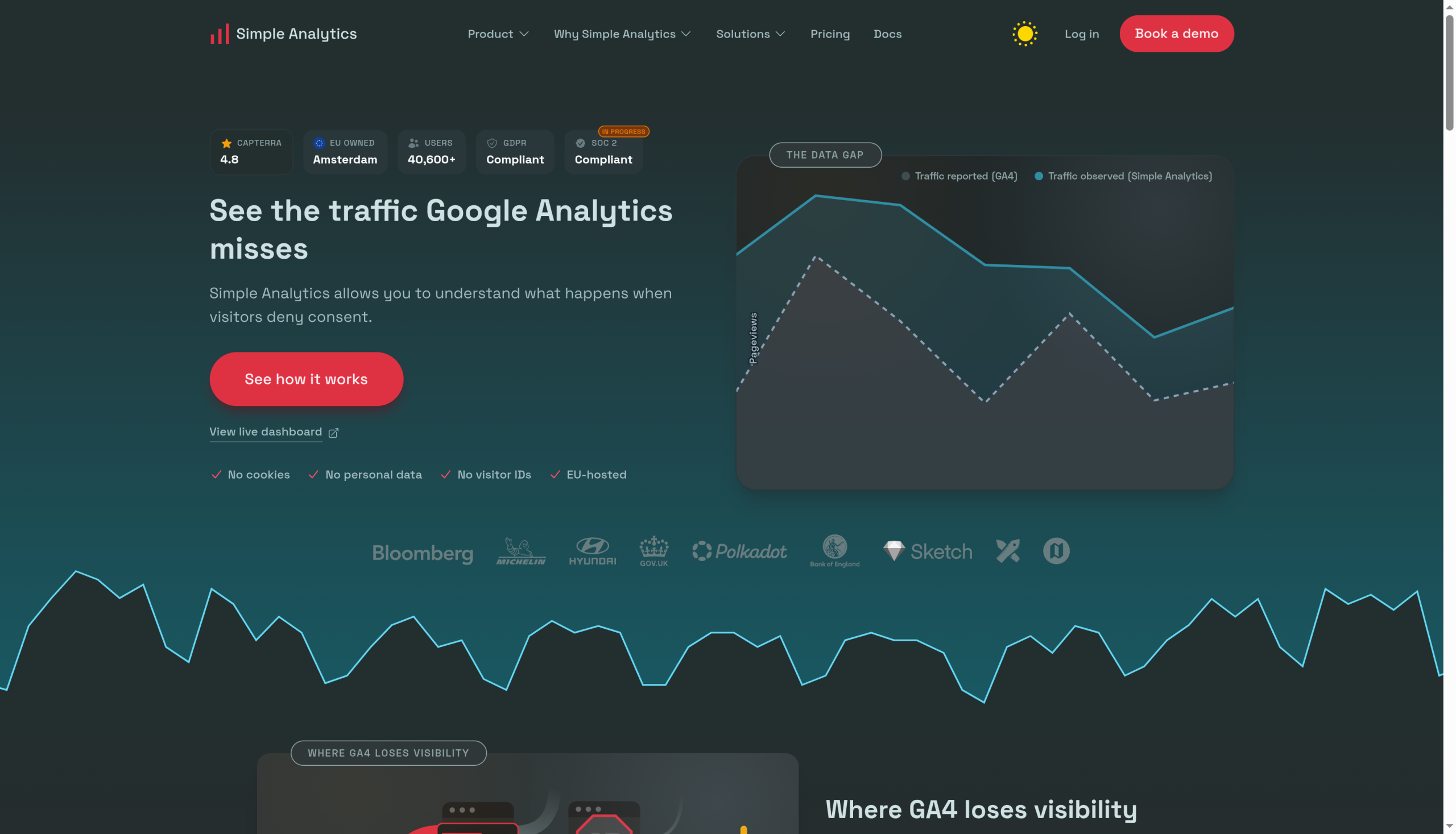
Best for: people who want to recover the traffic GA4 loses to consent denials.
Simple Analytics is a cookieless, EU-hosted tool whose pitch is seeing the visits GA4 misses when people reject the cookie banner. It records no cookies, no personal data, and no visitor IDs, so it generally needs no consent prompt, and the dashboard is clean and minimal. It offers a limited free tier with short data history and paid plans above that. If your GA4 numbers look low because a chunk of visitors deny consent, this is the angle it is built for.
- Pros: cookieless with no banner, EU-hosted, a clear minimal dashboard, and it captures consent-denied traffic.
- Cons: the free tier is limited, and it is lighter on advanced features.
Pricing: a limited free tier; paid plans for more history and features.
5. Umami
Best for: people who want a free, open-source analytics platform.
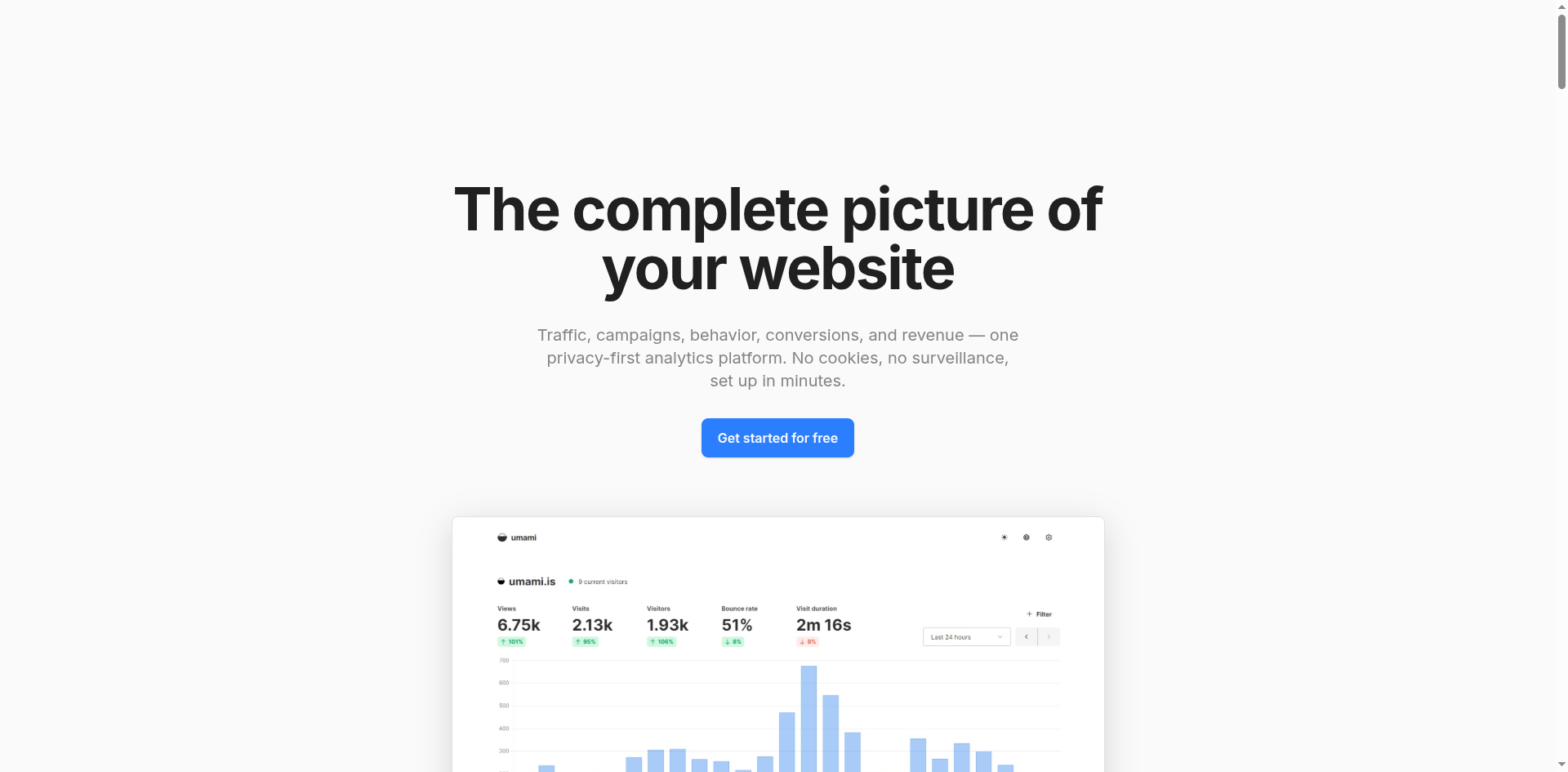
Umami is an open-source, privacy-first platform you can self-host for free, or run on Umami Cloud, which has a free tier for smaller sites. It is cookieless and collects no personal data, so it avoids the consent banner, and the dashboard is simple and fast. Self-hosting takes some technical setup, but it gives you full control at no software cost, which makes Umami popular with developers and indie site owners. For a genuinely free, open route off GA4, it is the pick.
- Pros: free and open-source, self-hostable, cookieless, and a free cloud tier for small sites.
- Cons: self-hosting needs technical comfort, and it is lighter on advanced reporting.
Pricing: self-hosting is free; Umami Cloud has a free tier plus paid plans.
How We Chose These
We started from why people leave GA4: it is complex, it leans on cookie consent, and it raises privacy questions. So we looked for tools that are cookieless by default, since that is what lets most sites drop the consent banner, and we checked that each shows the core numbers, visitors, sources, and top pages, without a steep learning curve. We weighed data ownership and EU hosting, whether there is a free or self-hosted option, WordPress compatibility, and price. We kept the list to five with clearly different strengths, from a simple paid tool to a free open-source platform, so you can match one to your traffic and your comfort with setup.
A quick note on the banner, since it is the reason many of these tools exist. Consent rules generally apply when a tool stores or accesses information on a visitor’s device, which is what tracking cookies do. The UK Information Commissioner’s Office explains in its cookies guidance that you need consent to store a cookie on someone’s device. Because the tools here are cookieless and avoid personal data, most sites can run them without a consent banner, but rules vary by country and situation, so confirm your own obligations before you drop the banner.
The Bottom Line
For most site owners, Plausible is the easiest privacy-first replacement for GA4: cookieless, simple, and affordable. Choose Fathom Analytics if you want the same simplicity and will pay a bit more, Matomo if you need GA-level depth and full data ownership, Simple Analytics if consent denials are hiding your real traffic, and Umami if you want a free, open-source option you can host yourself. Whichever you pick, add its script or WordPress plugin, confirm it is cookieless in your setup, and check your consent obligations before removing any banner.
Frequently Asked Questions
What is the best Google Analytics alternative?
For most people, Plausible is the best all-around Google Analytics alternative: cookieless, simple, EU-hosted, and affordable from around $9 a month. Fathom Analytics is a close, slightly pricier match, Matomo is the choice for GA-level depth and self-hosting, Simple Analytics is built for capturing consent-denied traffic, and Umami is the best free open-source option. The right pick depends on how much depth you need and whether you want to self-host.
Do privacy-friendly analytics tools need a cookie consent banner?
Usually not. Consent rules apply when a tool stores or reads information on a visitor’s device, which is what tracking cookies do. The tools here are cookieless and avoid personal data, so most sites can run them without a consent banner. That said, requirements differ by country and by how you configure the tool, so confirm your own legal obligations rather than assuming you are exempt.
Are these analytics tools GDPR compliant?
They are designed to be, which is much of their appeal. Plausible, Fathom, Simple Analytics, and Umami are cookieless and avoid collecting personal data, and several are EU-hosted, all of which support GDPR compliance. Matomo can be configured to be compliant and lets you keep data on your own server. Compliance still depends on your overall setup and privacy policy, so review each tool’s documentation for your situation.
Can I use these with WordPress?
Yes. Each of these works with WordPress, usually through an official plugin or by adding a small tracking script to your theme, and many have setup guides for it. Plausible, Fathom, Matomo, Simple Analytics, and Umami all support the standard script method that works on any site, so you have a path even where there is no dedicated plugin. Add the script or plugin, confirm data is flowing, and you are set.
What To Do Next
Pick one tool that matches your needs and traffic, add its WordPress plugin or tracking script, and watch a day of data to confirm it is recording. Compare the numbers to GA4 for a week, especially if you suspect consent denials are hiding visitors, then decide whether to keep both or drop GA4. Confirm the tool is cookieless in your setup and check your consent obligations before you remove any banner. For more on running a site, see our Blogging and Tech News sections, and if you use AI visuals, our guide on using AI-generated images on a blog legally is worth a read.