


You pick up storm branches, drop them in the fire pit, and light a small fire with your family. Ten minutes later a neighbor is on the phone to 911. It happens more than you would think, and most of it comes down to a few rules people never checked.
A backyard fire pit sits at the intersection of local fire code, air-quality rules, and plain old neighbor relations. The good news is that a small recreational fire is legal in most places without a permit. The trouble starts with the details: how far the fire has to be from your house, what you are allowed to burn, whether a burn ban is in effect, and what happens when smoke drifts next door. Here is how each piece works and how to stay on the right side of all of them.
What To Know
In most areas a small recreational fire, commonly defined as under 3 feet wide and 2 feet tall, is allowed without a permit, as long as you keep it a safe distance from anything that can burn. Under the widely-used International Fire Code, that distance is often 25 feet from a structure for an open fire pit and about 15 feet for a portable outdoor fireplace, though many towns set their own numbers and gas pits are sometimes allowed closer. Burn only clean, dry, untreated wood, never trash or yard waste, keep the fire attended and a hose or extinguisher close, and check for a burn ban before you light. Rules vary by city, so confirm your local fire code first.
Do You Need a Permit for a Fire Pit?
Usually no, if it is a small recreational fire. Most fire codes separate a recreational fire, meaning a small contained fire for warmth or cooking, from open burning, meaning larger fires or burning debris and land-clearing waste. Recreational fires generally do not require a permit, while bonfires and open burning often do. The lines are drawn by size and purpose, so a modest fire in a store-bought pit or a small ring is typically fine, while a towering brush fire is not. A permanent installation with a gas line, or an HOA that requires approval, can add a permit step even for a small pit, so check locally before you build anything fixed.
This is general information, not legal advice. Fire pit rules are set locally and change with weather and season, so confirm the current requirements with your city or county fire department, your HOA, and your state’s air-quality agency before you burn, especially during dry conditions.
How Far From the House Does a Fire Pit Have to Be?
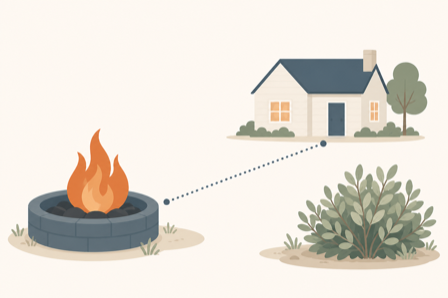
Distance is the rule people break most. The National Fire Protection Association stresses keeping outdoor fires well clear of anything that can catch, including your home, fences, sheds, low branches, and dry grass. Under the International Fire Code, an open recreational fire is often required to be at least 25 feet from a structure, and a portable outdoor fireplace at least 15 feet. Some towns allow a gas or propane pit closer, around 10 feet, because it throws no sparks or embers, while others apply the full distance to every fuel type. Treat these as the floor, add margin on a windy night, and never put a pit under a covered patio or overhanging roof.
What You Can and Cannot Burn
Fuel is the other common violation. Burn only clean, dry, untreated firewood or manufactured fire logs. Do not burn trash, cardboard, painted or treated lumber, leaves, or yard waste, which is illegal in many places and produces heavy smoke and toxic fumes. Beyond the fuel, most jurisdictions require the same basic safety steps:
- Keep it attended. Someone responsible should watch the fire the entire time it burns.
- Have water or an extinguisher ready. Codes often require a hose or a bucket of water within reach, so keep one close whenever the fire is lit.
- Mind the weather. Skip the fire on windy or red-flag days, when embers travel and bans are common.
- Check for a burn ban. During dry spells many areas ban all outdoor wood fires, though gas and propane pits are sometimes exempt.
- Put it out fully. Drown the fire, stir the ashes, and drown again until it is cold before you leave it.
When a Neighbor Complains About Smoke
Even a legal fire can become a problem next door. Wood smoke carries fine particles that bother people with asthma, heart or lung conditions, young children, and older adults, which is why the EPA asks people to consider neighbors and wind direction before burning. If a neighbor complains, the practical response is to check the wind, move or delay the fire, and switch to a cleaner fuel like propane if smoke is a recurring issue. If you are the one affected, a calm conversation usually works better than a call to authorities, but a persistent smoke problem can be reported to your local non-emergency line or code enforcement as a nuisance. In an HOA, the community’s rules may govern fire pits regardless of city code, so that is worth reading too.
Frequently Asked Questions
Do I need a permit to use a fire pit in my backyard?
In most places, a small recreational fire, generally under 3 feet wide and 2 feet tall, does not need a permit. Permits usually apply to larger open burning, bonfires, or land-clearing fires, and sometimes to permanent gas-line installations. Your city or county fire department sets the rules, and an HOA may add its own approval step, so confirm both before you build a fixed pit or light a larger fire.
How far does a fire pit need to be from the house?
A common requirement under the International Fire Code is at least 25 feet from a structure for an open fire pit and about 15 feet for a portable outdoor fireplace, though local codes vary and some allow gas pits closer to around 10 feet. Always keep the pit clear of fences, sheds, overhanging branches, and dry grass, and add extra distance on windy days. Check your local fire code for the exact number where you live.
Can my neighbor call the police about my fire pit?
Yes, a neighbor can report a fire they believe is unsafe or creating a smoke nuisance, usually through a non-emergency line or code enforcement, and the fire department can respond. If your fire follows local rules on size, distance, fuel, and burn bans, you are generally within your rights, but an officer can still ask you to put it out if they judge it unsafe. Keeping the fire small, clean-burning, and mindful of the wind avoids most complaints.
Are gas or propane fire pits treated differently than wood?
Often, yes. Because gas and propane pits produce no sparks, embers, or heavy smoke, some jurisdictions allow them closer to structures and exempt them from burn bans that apply to wood fires. They also cut down on the smoke that leads to neighbor complaints and air-quality concerns. The trade-off is the cost of the unit and, for a permanent gas line, a possible permit. Rules still vary locally, so confirm before you assume a propane pit is unrestricted.
Before You Light It
Run the short checklist every time: confirm no burn ban is in effect, keep the pit the required distance from the house and anything combustible, burn only clean dry wood, stay with the fire, and have water ready. Read your HOA rules if you have one, and be considerate of which way the smoke is blowing. A small, well-placed fire that follows the local code is the kind nobody calls the fire department about. For more on home and legal questions, see our Law and Home Improvement sections.