
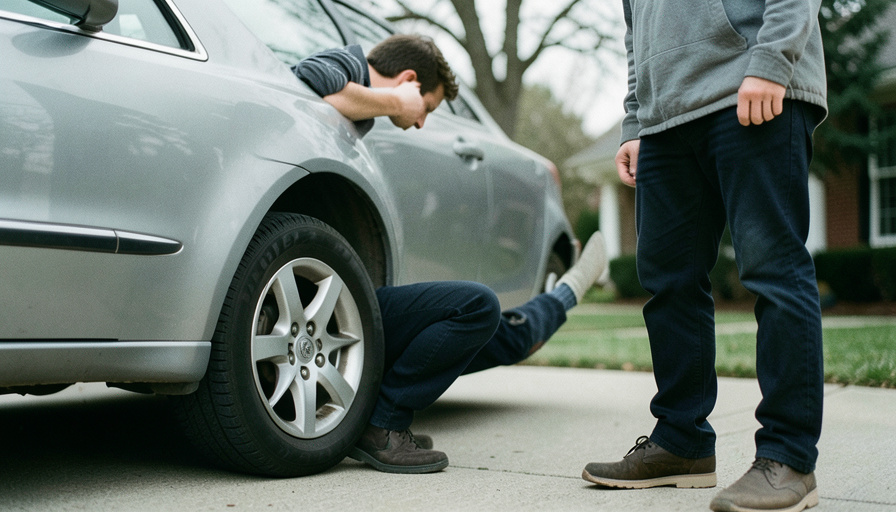
A private seller says you can look but not drive the car. Usually that’s a dealbreaker. Here’s how to tell a reasonable condition from a red flag, and when to walk.
You found the listing, messaged the seller, and the reply lands wrong: you can come look at the car, but you cannot drive it. Now you are stuck weighing a deal that seems good against a request that feels off. In most private sales, a flat refusal to let you drive the car is the seller telling you something is wrong without having to say it. But not every condition is a refusal, and knowing the difference keeps you from walking away from a good car or into a bad one.
Short Answer
A private seller who refuses any test drive, and refuses to let your mechanic inspect the car, is a walk-away. Reasonable conditions are different: a seller can ask to see your license and proof of insurance, ride along, meet in a public place, and keep the drive short and local. If driving is genuinely limited because the car is unregistered, insist on a pre-purchase inspection instead. If the seller blocks both the drive and the inspection, find another car.
First, separate a refusal from a reasonable condition
Sellers have real safety concerns about handing keys to a stranger, so some conditions are fair and not red flags at all. Asking to see your driver’s license, wanting proof that you are insured, riding along with you, meeting in a busy public spot, and keeping the drive to a short local loop are all normal, sensible requests. Agree to them without a second thought.
A refusal is different. “You can sit in it and start it, but you cannot drive it anywhere,” with no willingness to arrange an alternative, is not a safety measure. It is a wall, and walls in private car sales usually hide something.
When “no test drive” is a red flag
The excuses tend to rhyme, and none of them holds up. “It would take too long,” “I have other buyers waiting,” “my mechanic already checked it,” and “I can’t let it leave the driveway” are the standard lines, and consumer advisories treat a blanket test-drive refusal as a major warning sign of hidden mechanical trouble, a title problem, or an outright scam. A car that drives fine is a car sellers want you to drive, because the drive sells it. When they will not let you, assume the drive would cost them the sale.
The inspection is your real test, and refusing it is worse
If a drive is genuinely restricted, say the car is not currently registered or insured to be on the road, the fallback is a pre-purchase inspection. For roughly $100 to $200, a mechanic checks the car on a lift and tells you what a short drive never could. A cooperative seller will meet you at a shop or let you arrange a mobile inspection, even a tow if needed. A seller who refuses an independent inspection is waving a bigger flag than one who refuses a drive, because it means no expert eyes at all. That is your cue to walk.
How to verify a car you can’t fully drive
When your access is limited but the seller is not stonewalling, stack up other checks before you decide.
- Insist on a cold start. Arrive before the seller warms the engine, since problems often hide once a car is up to temperature.
- Run the VIN through a history report and confirm it matches the dash, the door jamb, and the title.
- Have a mechanic scan for stored trouble codes with an OBD-II reader, which surfaces issues a dashboard light may not.
- Do a thorough walkaround: fluids, leaks under the car, tire wear, rust, uneven panel gaps, and any warning lights on the cluster.
- Verify the title is in hand and in the seller’s name, and that the odometer reading matches the paperwork.
Instant walk-away triggers
Some signs mean stop now, no matter how good the price looks.
- The seller has no title in hand, or the name on it does not match theirs.
- The VIN does not match across the dash, the door jamb, and the documents.
- They refuse both a test drive and any independent inspection.
- They want a deposit before you have seen the car in person.
- There is heavy urgency, a story about being out of town, or a price that is too good to be real.
Private-party car sales are usually final and sold as-is, so verify before you pay rather than after. This is general guidance, not legal advice, and rules vary by state.
Frequently Asked Questions
Is refusing a test drive always a scam?
Not always, but it is a serious red flag. Sometimes a car is unregistered and cannot legally be driven on the road, in which case a cooperative seller allows a pre-purchase inspection instead. A refusal of both is the real warning sign.
Are the seller’s conditions on a test drive normal?
Many are. Asking for your license and insurance, riding along, meeting in public, and limiting the drive to a short local route are all reasonable safety measures, not red flags.
What is a pre-purchase inspection and what does it cost?
It is an inspection by a mechanic before you buy, typically $100 to $200. They check the car on a lift and report its real condition, which is often more revealing than a short test drive.
How do I check a car I can’t test drive?
Insist on a cold start, run a VIN history report, have a mechanic scan for trouble codes, do a careful walkaround, and confirm the title and odometer. If the seller blocks all of that, walk away.
What are instant walk-away signs?
No title in hand, mismatched VINs, refusal of any inspection, a deposit demanded before you see the car, and high-pressure urgency. Any one is reason enough to move on.
Should I ever buy a car sight unseen?
Generally no. Do not buy a car you have not seen in person or been allowed to have inspected. Transparent sellers exist, so hold out for one rather than gambling on a locked door.
Final Word
Treat the test drive as a question the car answers about itself. A seller who lets you drive it, with sensible conditions, is confident in what you will find. A seller who refuses both a drive and an inspection has decided you should not find out, and that decision is your answer. Agree to reasonable safety terms, insist on at least a professional inspection, and when both doors close, close the deal by walking to the next listing. For related used-car reading, see our comparison of what the trade shifts mean for car prices, and browse ShoutPost’s Autos section.


Leave a Reply
You must be logged in to post a comment.