
Five language apps built for spoken travel phrases you can download and use with no signal, ranked by how each fits a trip.
Duolingo is good at one thing travelers do not actually need on the ground: keeping a daily streak. It is weaker at the thing you do need, which is getting a useful phrase out of your mouth when you are standing at a counter with no wifi. If your goal is to order food, ask directions, and be polite in another language, you want an app that teaches spoken phrases and lets you download the audio before you fly. Here are five Duolingo alternatives that do exactly that, sorted by the kind of traveler each one suits.
The best Duolingo alternatives for travelers who need offline audio are:
- Pimsleur: best for audio-first spoken practice
- Babbel: best for practical travel phrases and structure
- Mondly: best for a quick phrasebook across many languages
- Memrise: best for real native-speaker clips
- Drops: best for fast vocabulary in five-minute bursts
Quick Picks
| App | Best For | Price | Offline Audio |
|---|---|---|---|
| Pimsleur | Audio-first speaking | Subscription, free trial | Yes, downloadable lessons |
| Babbel | Practical travel phrases | Subscription, annual discounts | Yes, download lessons |
| Mondly | Quick phrasebook, many languages | Free tier plus premium | Yes, with premium download |
| Memrise | Native-speaker clips | Free tier plus Pro | Yes, with Pro download |
| Drops | Fast visual vocabulary | Free 5 min daily, premium | Yes, with premium download |
Table of Contents
1. Pimsleur
Best for: Travelers who want to speak and understand out loud, hands-free.
Pimsleur is audio at its core, which makes it the natural pick for a traveler. Each lesson is a roughly thirty-minute spoken conversation you listen and respond to, so you practice saying phrases rather than tapping the right word on a screen. That builds the muscle you actually use at a market or a train station, and because the lessons download to your device, you can run through one on the plane or in a taxi with no connection.
The audio-first approach is also its limit. There is less reading and writing practice, and the method rewards steady listening over quick reference, so it is better for prepping in advance than for looking up a single phrase on the spot. For a traveler who wants to arrive able to say and hear the basics with confidence, though, Pimsleur is hard to beat.
- Pros: Spoken, hands-free lessons; strong for pronunciation and listening; lessons download for offline use; good for learning in transit.
- Cons: Light on reading and writing; subscription cost is higher than casual apps; less useful as a quick lookup.
Pricing: Subscription, commonly around $15 to $20/mo, with a free trial and occasional lifetime deals.
2. Babbel
Best for: Travelers who want practical, everyday phrases in short, structured lessons.
Babbel is built around real-life conversation, and its lessons lean toward the practical: greetings, ordering, directions, shopping, and the polite phrases that smooth a trip. Lessons are short, around ten to fifteen minutes, so you can prep in the weeks before you go, and you can download them to study offline on the flight. The pronunciation practice and clear explanations make it a comfortable middle ground between a game and a course.
It is a paid app once you get past the first lesson, and the free content is limited. It also covers fewer languages than some rivals, so a traveler headed somewhere less common may not find their language. For mainstream European and popular world languages, Babbel is one of the most travel-ready options going.
- Pros: Practical, travel-focused phrases; short structured lessons; offline download; clear grammar and pronunciation tips.
- Cons: Paywalled after the first lesson; fewer languages than some apps; subscription auto-renews.
Pricing: Subscription, cheaper on annual plans, with regular discounts and sometimes a lifetime option.
3. Mondly
Best for: Travelers who want a quick phrasebook and a wide choice of languages.
Mondly covers a large range of languages and organizes a lot of its content around practical topics and phrases, which suits a traveler who wants to grab the essentials fast. It leads with useful categories like travel, dining, and emergencies, and it has a free tier so you can try it before committing. Premium adds offline downloads, so you can save the lessons you need for a trip.
The gamified style can feel repetitive, and the depth is shallower than a full course, so it is better for surface travel phrases than for real fluency. As a quick, broad phrasebook you can download and carry, though, it does the job for a lot of destinations.
- Pros: Very wide language selection; practical topic-based phrases; free tier to start; offline downloads on premium.
- Cons: Repetitive at times; shallower than a full course; best features need premium.
Pricing: Free basic tier, with premium monthly or annual plans and frequent lifetime offers.
4. Memrise
Best for: Travelers who want to hear how locals really say things.
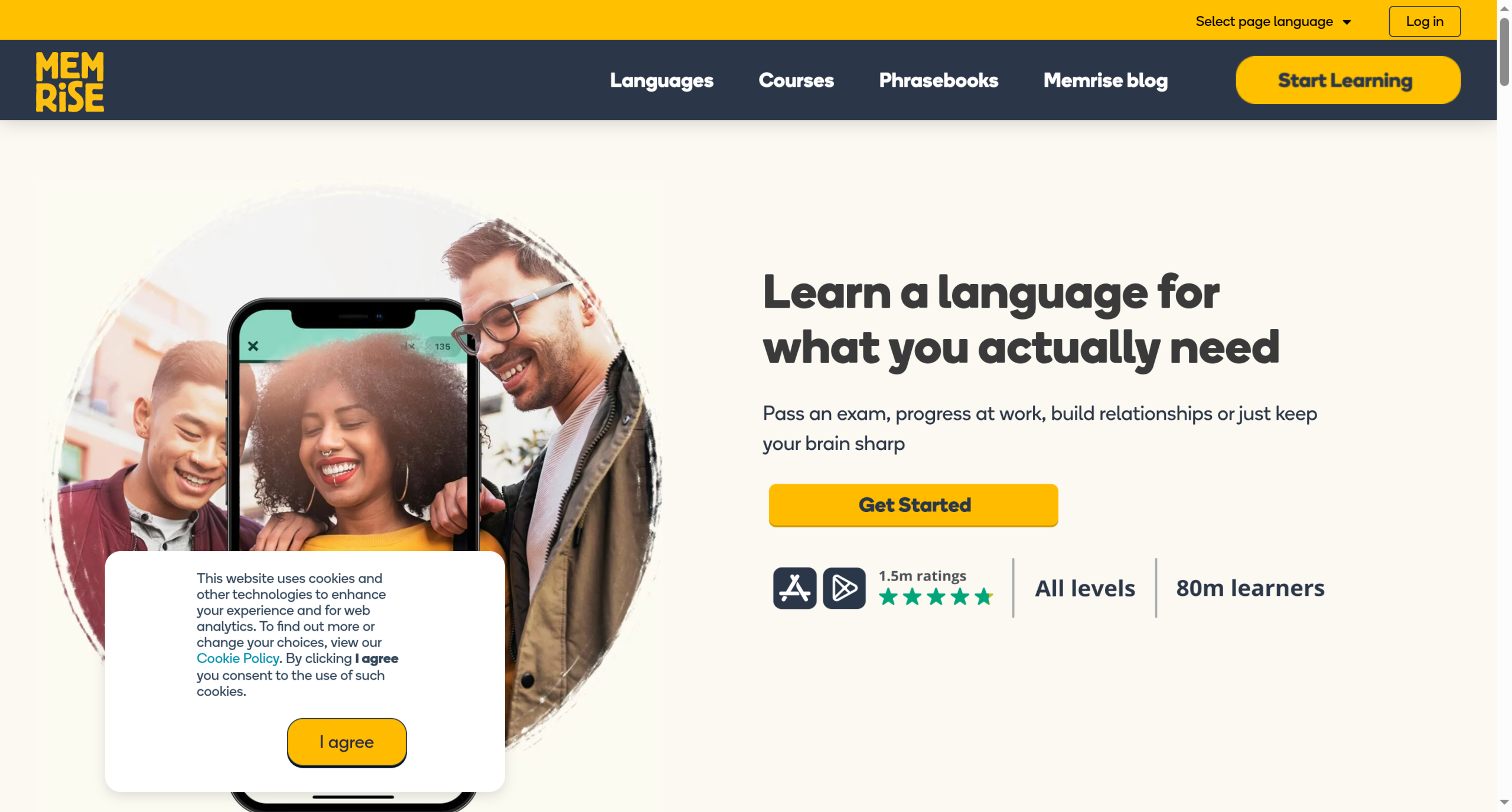
Memrise leans on short video and audio clips of native speakers, so you hear real people saying phrases at natural speed rather than a synthetic voice. That is genuinely useful for a traveler, because the way a phrase actually sounds on the street rarely matches a textbook. It also organizes content into practical courses and phrasebooks, and it markets itself around learning what you actually need rather than grammar drills.
The free tier is limited and the deeper features sit behind a Pro subscription, which is also where reliable offline access lives. The experience can feel less structured than a formal course. For arriving with your ear tuned to real pronunciation, though, the native-speaker clips are a real edge.
- Pros: Real native-speaker audio and video; practical phrasebooks; travel-focused framing; offline access on Pro.
- Cons: Best features and offline need Pro; less structured than a course; free tier is limited.
Pricing: Free tier plus a Pro subscription, cheaper annually, with periodic lifetime deals.
5. Drops
Best for: Travelers who want to pick up vocabulary in tiny, painless sessions.
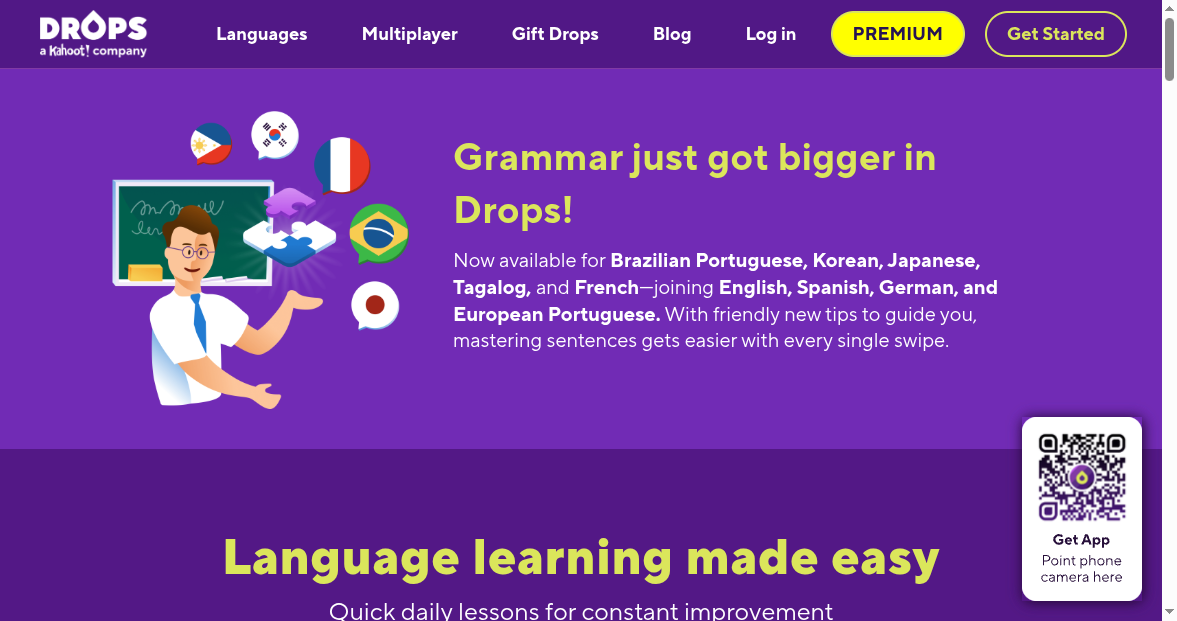
Drops is the fast-vocabulary option, built around five-minute sessions that teach words through bright images and quick swipes. For a traveler, that is a low-effort way to load up on the nouns you point at, like foods, transit, and directions, in the weeks before a trip. The visual, word-first method makes it easy to keep up even when you are busy, and premium unlocks offline use.
The trade-off is that Drops teaches words far more than full sentences or conversation, so it builds a useful vocabulary but not the ability to string a real request together. The free version also caps you at a short daily session. As a companion for quick vocabulary, paired with a more conversational app, it earns its place.
- Pros: Quick five-minute sessions; strong visual vocabulary building; low effort to maintain; offline on premium.
- Cons: Heavy on single words over sentences; free tier is time-capped; not a full speaking course.
Pricing: Free five minutes a day, with premium monthly, annual, or lifetime plans.
How We Chose These
We picked for the traveler standing in a foreign airport, not the person chasing a year-long streak. The priorities were spoken, practical phrases you can actually use, reliable offline access so a lost signal does not lock you out, and clear audio you can hear and copy. We favored apps that let you download lessons before a trip, that focus on real travel situations like dining, directions, and emergencies, and that fit into short prep sessions rather than demanding hours. Each pick leads in a different area: audio immersion, structured travel phrases, a broad quick phrasebook, native-speaker sound, and fast vocabulary. One note on cost: most of these renew automatically, so before you subscribe, the FTC’s guidance on free trials and auto-renewals is worth a glance to avoid a surprise charge after your trip.
The Bottom Line
If you want to arrive able to speak and understand, choose Pimsleur and do a few audio lessons on the way. For practical, structured travel phrases, Babbel is the easiest all-rounder. Mondly is the pick when you want a quick phrasebook and a less common language, Memrise is the one for hearing how locals truly sound, and Drops is a painless way to load up vocabulary on the side. Download your lessons before you fly, and pair a speaking app with a vocabulary app if you have time to prepare.
Frequently Asked Questions
What is the best Duolingo alternative for travelers?
For most travelers, Pimsleur is the best alternative because its audio-first lessons build the ability to speak and understand out loud, and they download for offline use. If you want short, practical travel phrases in a structured course, Babbel is the easiest all-rounder. The best choice depends on whether you prioritize speaking, quick phrases, or vocabulary.
Which language apps work offline?
All five here offer offline access, though most require you to download lessons in advance and some reserve offline use for a paid tier. Pimsleur and Babbel let you download lessons to study without a connection, while Mondly, Memrise, and Drops enable offline content on their premium plans. Download what you need before you travel, since app stores and lessons will not load without signal.
Is Duolingo good enough for travel?
Duolingo can teach useful vocabulary and basic phrases, but it emphasizes gamified practice over spoken conversation, and its offline options are limited. For a trip where you need to speak and listen with patchy connectivity, an audio-focused app like Pimsleur or a travel-phrase app like Babbel usually prepares you better. Many travelers use Duolingo alongside one of these.
How far in advance should I start learning travel phrases?
Two to four weeks of short daily sessions is enough to pick up the essentials: greetings, numbers, directions, dining, and polite phrases. Focus on the situations you will actually face, download your lessons before you leave, and practice saying phrases out loud instead of silently reading them. Even a week of audio practice makes a noticeable difference on arrival.
What To Do Next
Pick one speaking-focused app and, if you have time, add a vocabulary app, then download your lessons while you still have wifi at home. Spend your prep sessions on the phrases you will really use, and practice them aloud so they come out under pressure. For more trip-planning and gear guidance, see our Travel and Education sections.

Leave a Reply
You must be logged in to post a comment.